

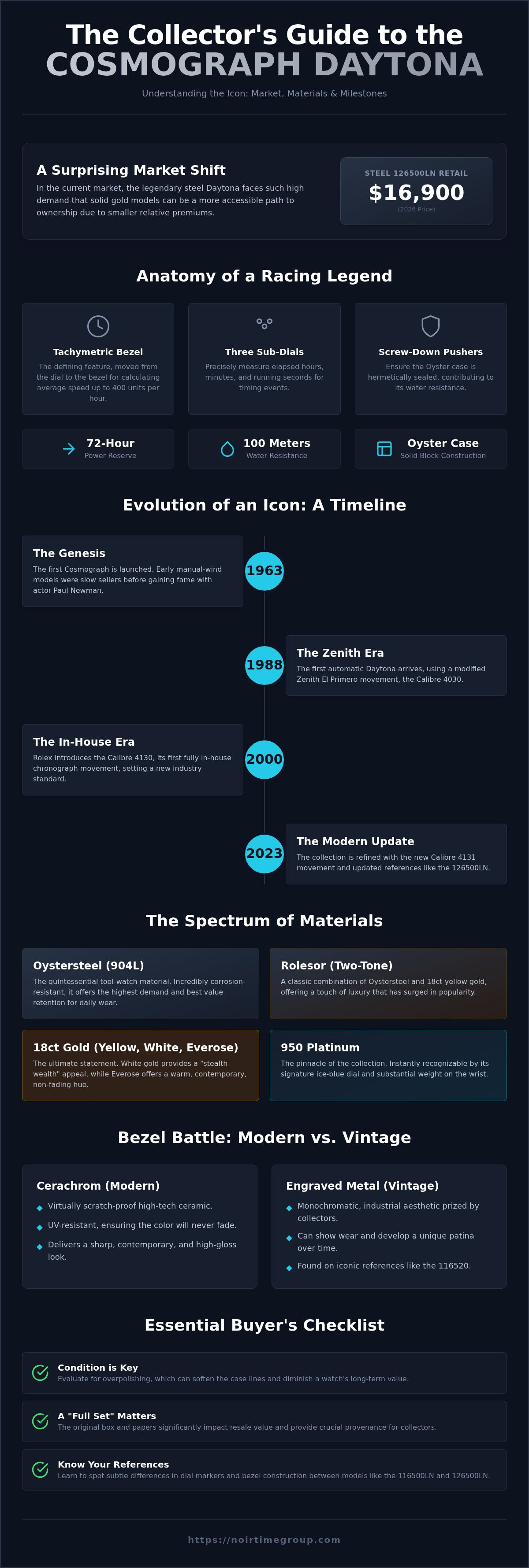
Would you believe that the most iconic racing watch on the planet is currently more accessible in solid gold than in its legendary steel form? While the cosmograph daytona remains the undisputed king of chronographs, the 2026 market has shifted the math for collectors. With retail prices for the steel 126500LN now at $16,900 after recent increases, many enthusiasts are finding that the smaller relative premiums on precious metal models offer a more logical path to ownership.
It's easy to feel overwhelmed by the subtle differences between a 116500LN and the current 126500LN, or to worry about the condition of a pre-owned piece. You want a watch that reflects your style without falling into the trap of an overpolished or questionable example. This guide provides the clarity you need to choose a reference that fits your wrist and your financial goals.
We will break down the four generations of the Daytona, explain the impact of the 2026 price hikes, and highlight why the new Rolesium and Le Mans editions are changing the collection's landscape. You'll gain the expertise to select your perfect racing icon from a position of strength.
Key Takeaways
- Learn how the unique tachymetric scale defines the cosmograph daytona as a professional racing instrument rather than just a standard chronograph.
- Compare the daily durability of Oystersteel with the luxury of Rolesor to find the configuration that best suits your personal style and budget.
- Distinguish between the legendary 116500LN and the 2023 126500LN update by identifying subtle changes in dial markers and bezel construction.
- Use a professional buyer's checklist to evaluate condition grading and understand why a full set of box and papers significantly impacts long-term value.
- Discover how a specialized collection of over 100 references provides a clearer path to finding specific materials and rare configurations for any collector level.
What is the Cosmograph Daytona? Understanding the Icon
The cosmograph daytona isn't just another luxury watch. It's a high-performance mechanical instrument built for the high-stakes world of professional racing. While many brands offer chronographs, Rolex uses the term 'Cosmograph' to distinguish its specific design. This name refers to a chronograph where the tachymetric scale is moved from the dial to the bezel. This change creates a cleaner dial and offers better legibility for drivers tracking speed at a glance.
Several features make this watch instantly recognizable:
- Three distinct sub-dials for measuring elapsed hours, minutes, and seconds.
- Screw-down pushers that ensure the case remains hermetically sealed against moisture and dust.
- A fixed tachymeter bezel for calculating average speed over a set distance.
Demand for these pieces consistently outpaces production. Because Rolex maintains tight control over supply, the Daytona has become a global benchmark for value retention. It's often the first watch collectors look for when they want a piece that balances historical significance with long-term financial stability.
A Brief History of Speed: 1963 to Present
The Rolex Cosmograph Daytona history began in 1963, though it didn't find immediate fame. Early manual-wind models were actually slow sellers. This changed when actor Paul Newman famously wore one, turning specific "exotic" dials into some of the most expensive vintage watches ever auctioned. In 1988, the "Zenith era" arrived. Rolex modified the Zenith El Primero movement to create the Calibre 4030, the first automatic Daytona movement. By 2000, Rolex introduced the fully in-house Calibre 4130. The latest evolution arrived in 2023 with the Calibre 4131, featuring a refined aesthetic and improved efficiency. These milestones mark the watch's journey from a niche tool to a global status symbol.
The Anatomy of a Daytona: Bezel, Dial, and Movement
The tachymetric scale is the heart of the watch's racing DNA. It allows a driver to measure average speeds of up to 400 units per hour. This functionality is paired with modern movements that offer a robust 72-hour power reserve. You can set the watch down on Friday evening and it'll still be ticking on Monday morning without any intervention. Protecting this movement is the Oyster case. It provides water resistance up to 100 meters (330 feet) and is carved from a solid block of metal. Whether it's 904L Oystersteel or 18ct gold, the case is built to withstand the vibrations of a cockpit and the rigors of daily life.
Materials and Configurations: Choosing Your Style
Selecting a cosmograph daytona is as much about the material as it is about the movement. The choice of metal defines the watch's weight, its visual "pop," and its long-term market liquidity. For most, Oystersteel (904L) is the gold standard for daily wear. It's incredibly resistant to corrosion and maintains a rugged, tool-watch aesthetic that honors the model's racing roots. Because demand for steel remains high, these pieces often hold their value best on the secondary market.
If you prefer a touch of luxury without going full gold, Rolesor is an excellent middle ground. This two-tone combination of Oystersteel and 18ct yellow gold offers a classic look that has surged in popularity recently. For the ultimate statement, the collection expands into solid 18ct yellow, white, and Everose gold. While yellow gold is timeless, white gold offers a "stealth wealth" appeal, and Everose provides a warm, contemporary hue that doesn't fade over time. At the very top sits the platinum "Platona," recognizable by its substantial weight and signature ice-blue dial.
The market for these different configurations is often influenced by the broader investment potential of vintage Daytonas, where rarity and material choice dictate auction records. Whether you want a rugged steel piece or a heavy platinum investment, you can explore a diverse range of Daytona configurations to find the one that fits your collection strategy.
Cerachrom vs. Steel Bezels
The bezel is the face of the cosmograph daytona. Modern references feature Cerachrom, a high-tech ceramic that is virtually scratch-proof and unaffected by UV rays. It won't fade or "ghost" like vintage aluminum inserts. However, many collectors still hunt for the 116520 era's stainless steel bezels. These all-metal bezels offer a monochromatic, industrial look that feels more like a traditional instrument. Ceramic bezels provide a sharper contrast, especially on white "Panda" dials, making the watch appear slightly larger on the wrist.
Bracelet Options: Oyster vs. Oysterflex
Your choice of bracelet completely changes how the watch wears. The classic three-piece link Oyster bracelet is the standard for metal models, known for its security and comfort. It includes the Easylink extension, which lets you adjust the length by 5mm without tools. This is a lifesaver when your wrist swells in the heat. For a sportier feel, some gold models come on the Oysterflex. It looks like a rubber strap but features a flexible titanium and nickel alloy blade inside. This gives you the durability of a metal bracelet with the lightweight comfort of an elastomer, making it a favorite for active owners.
Modern vs. Neo-Vintage: Which Reference is Right for You?
Choosing between a brand-new reference and a discontinued classic is the most common dilemma for collectors. While the 40mm case size has remained the official measurement for decades, how that size sits on your wrist varies significantly between generations. Older "neo-vintage" models often feel slimmer and more compact, while modern ceramic versions have a bolder, more substantial presence due to their updated lug profiles and bezel designs. Understanding these nuances helps you decide if you want the latest technical refinements or the raw charm of a previous era.
The 116500LN is arguably the most famous watch of the last decade. Released in 2016, it introduced the black Cerachrom bezel to the steel cosmograph daytona line, creating a look that collectors had craved for years. It's a modern legend that still dominates the market. In contrast, the 2023 update (reference 126500LN) brought subtle but impactful changes. You'll notice a metal ring surrounding the ceramic bezel insert and slightly thinner, more elegant dial markers. If you prefer an industrial, all-metal look, the 116520 is your best bet. It was the first reference to house the in-house Calibre 4130 movement, marking a major turning point in Rolex Cosmograph Daytona history.
The Investment Case for Steel Daytona Models
Steel models are the workhorses of the secondary market. The 116500LN specifically remains the benchmark for value, often trading at significant premiums over its original retail price. Over the last 5 years, we've seen a "Daytona premium" that persists even during broader market corrections. Because of their lower entry price and high liquid demand, steel models often outpace gold in percentage growth over long periods.
Precious Metal References: The 'Heavy Hitters'
While steel is the volume leader, precious metals offer a different level of prestige. The yellow gold 116508 with a bright green dial completely changed how collectors view gold Daytonas, turning a niche configuration into a global "grail" watch. For those who want something more discreet, white gold variants like the "Ghost" (grey dial) or "Pikachu" (yellow dial on Oysterflex) offer a perfect blend of luxury and racing utility. You can explore our full collection of 100+ Daytona watches to see how these different metals and dial colors look in person before making your final decision.
The Buyer's Checklist: Authenticity and Condition
Buying a cosmograph daytona outside of an authorized dealer requires a disciplined approach to quality control. Because these watches are high-stakes investments, small details in condition can lead to large swings in market value. You're not just buying a watch; you're buying its history and provenance. A documented Rolex service history isn't just about functionality. It's a paper trail that confirms authenticity through the brand's own watchmakers, providing peace of mind that the internal components are genuine.
Verification starts with the serial number. On modern models, this is engraved on the rehaut, which is the inner ring between the dial and the crystal. You should also check the movement's authenticity. While you shouldn't open the case yourself, a reputable seller will provide high-resolution photos of the calibre. If the sub-dials don't snap back perfectly to zero or the winding feels "gritty" when you turn the crown, it's a red flag. These issues often signal either a counterfeit movement or a watch in need of an expensive mechanical overhaul.
Spotting an Overpolished Case
"Unpolished" is the most coveted status in the Daytona community. Every time a watch is polished to remove scratches, a tiny layer of metal is shaved away. This eventually ruins the sharp, geometric lines of the Oyster case. To check for this, look at the symmetry of the lugs. They should be thick and have a clear, brushed finish on top with sharp, well-defined edges. If one lug looks thinner than the others or the edges feel rounded to the touch, the watch has been heavily polished. Check the Rolex crown on the clasp as well; it should stand proud and crisp. If it looks flat or "melted," the piece has seen too much time on a polishing wheel.
Understanding the 'Full Set' Concept
A "full set" refers to a watch that includes everything it came with on the day of its original sale. This typically includes the outer box, the green inner presentation box, the manual, the warranty booklet, and any spare links. The warranty card is the most critical component of the set. It provides the exact date of sale, which determines the remaining factory warranty. You'll see "Green Tags" on newer models, which signify the five-year warranty and Superlative Chronometer status. Older "Red Tag" sets come from an era with shorter coverage periods. Missing these items can decrease the value of a cosmograph daytona by 10% to 20%.
To ensure you're getting a verified, high-quality piece without the guesswork, you can browse authenticated Daytona references that meet strict condition standards.
Finding Your Perfect Match at Noir Time Group
Finding the right cosmograph daytona shouldn't feel like a shot in the dark. At Noir Time Group, we've curated a significant collection of 109 references to ensure every collector finds their specific match. This volume allows us to offer a breadth of options that few other specialists can match. Whether you're hunting for an entry-level stainless steel model or a rare platinum piece, our inventory is expertly vetted for authenticity and high-grade condition. We provide detailed, high-resolution photography of every individual watch in our stock. You aren't looking at stock photos; you're seeing the exact bevels, dial texture, and bracelet condition of the watch that will arrive at your door. This transparency is backed by our established Shopify-backed secure transaction platform, giving you confidence in every click.
Top Picks for the First-Time Daytona Buyer
For those entering the world of Rolex chronographs, the 116520 and 116503 offer exceptional value. The 116520 is the definitive "steel bezel" modern classic. It's often considered a smart entry point because it carries the first in-house movement without the massive price tag of the newer ceramic models. If you want a bit more flair, the two-tone 116503 (Rolesor) provides a luxurious look at a price point that's often more accessible than pure steel in the current market. When choosing a dial, remember that black dials tend to look more compact and sporty. White dials offer higher contrast and can make the watch appear slightly larger on the wrist. Both options provide the versatility needed for a daily wearer that transitions from the office to the weekend.
Grail Watches for the Seasoned Collector
Experienced collectors often look toward precious metals to round out their portfolios. The Everose gold cosmograph daytona with a chocolate dial is a standout choice; it offers a warm aesthetic that pairs perfectly with formal or casual attire. For a cooler, more understated look, the white gold "blue dial" reference remains a perennial favorite among those who appreciate "stealth wealth." If you prioritize comfort and a modern vibe, the Oysterflex models are the way to go. These elastomer straps provide a sporty edge that balances the weight of a solid gold case. No matter your budget or style preference, our diverse stock is designed to meet the needs of a selective market. Browse the 109-piece Cosmograph Daytona collection and secure your icon today.
Secure Your Legacy on the Track and Beyond
Choosing a cosmograph daytona is a significant milestone for any watch enthusiast. You now have the expert knowledge to distinguish between the legendary 116500LN and the contemporary 126500LN update. You understand how material choices, from rugged Oystersteel to luxurious platinum, impact both the wrist presence and the long-term value of your timepiece. By following our buyer's checklist for authenticity and case condition, you can approach the market with the confidence of a seasoned pro.
Finding the right reference requires a specialized partner who understands the nuances of these high-performance instruments. With 109 Daytona models currently in stock, Noir Time Group provides one of the most diverse selections available today. Our team ensures that every piece is authentication guaranteed and delivered to you via secure global shipping. Don't let the complexity of reference numbers hold you back from owning the world's most famous chronograph. Take the next step in your collecting journey today.
Shop the Noir Time Group Cosmograph Daytona Collection and find the racing icon that perfectly fits your lifestyle.
Frequently Asked Questions
Is the Cosmograph Daytona a good investment for 2026?
The cosmograph daytona remains a strong investment in 2026 due to its consistent demand and Rolex's January 2026 price increases. Gold models saw an approximate 5.5% hike, while platinum rose by 3.5%. While the secondary market has seen corrections from its all-time peak, the steel 126500LN still trades significantly above its $16,900 retail price. Buyers are currently more selective, focusing on condition and complete sets.
What is the difference between the 116500LN and the 126500LN?
The primary visual difference is the bezel construction. The current 126500LN features a thin metal ring protecting the edge of the Cerachrom insert, whereas the 116500LN has a solid ceramic bezel. Internally, the 126500LN uses the updated Calibre 4131 movement with a skeletonized rotor. You'll also notice the 126500LN has slightly thinner sub-dial rings and more elegant, elongated hour markers compared to its predecessor.
Why is the Rolex Daytona so hard to find at retail?
Global demand for this specific model far exceeds the annual production capacity of the Rolex manufacture. Authorized dealers often reserve their limited allocations for long-standing clients, leading to multi-year waiting lists for new buyers. This extreme retail scarcity is why the secondary market is the primary acquisition point for most collectors. It's the only way to bypass the wait and secure a specific reference immediately.
How often does a Cosmograph Daytona need to be serviced?
Rolex recommends a service interval of about 10 years for modern references equipped with the Calibre 4131 or 4130. Your specific needs might vary based on how often you wear the watch and the environments it faces. If you use the chronograph functions daily or expose the watch to saltwater, more frequent inspections of the gaskets and seals are advisable to maintain its 100-meter water resistance.
Can I swim with my Rolex Daytona?
You can certainly swim with your watch thanks to the 100-meter water resistance of the Oyster case. The key is ensuring the Triplock winding crown and both chronograph pushers are fully screwed down before the watch gets wet. You shouldn't operate the chronograph pushers while underwater, as this can break the seal and allow moisture to enter the movement, leading to costly internal damage.
What does the 'Panda' dial refer to in the Daytona collection?
A 'Panda' dial describes a white main dial with black sub-dials at the 3, 6, and 9 o'clock positions. This nickname comes from the visual similarity to a panda's face and is one of the most iconic looks in the cosmograph daytona lineup. It's highly sought after for its high-contrast legibility. The 'Reverse Panda' is the opposite configuration, featuring a black dial with white sub-dials.
Does the Daytona hold its value better than the Submariner?
Both models are excellent at retaining value, but the Daytona typically commands a higher percentage premium on the secondary market. While a Submariner is a reliable "tool watch" staple, the Daytona's status as a flagship complication and its lower production numbers often lead to better long-term appreciation. It remains the primary choice for collectors who prioritize investment potential alongside the prestige of a high-end chronograph.
Why are some Daytonas manual-wind while others are automatic?
This reflects the evolution of watchmaking technology across four generations. Early models from the 1960s to the late 1980s used manual-wind movements because that was the industry standard for chronographs at the time. In 1988, Rolex introduced the first automatic Daytona using a modified Zenith movement. Modern versions are all automatic, offering the convenience of a 72-hour power reserve that winds itself as you move your wrist.
