

What if the best way to protect your watch’s resale prospects is to leave it alone? If you’re wondering how to maximize watch resale value, the answer isn’t always polishing or repair. Condition and originality matter, as do the box, papers, and service records you already have. Market demand, however, can shift beyond your control.
It’s natural to want the strongest possible offer, especially if you’re unsure whether a scratch, missing accessory, or past repair could affect a sale. Some choices are yours to make, but future prices aren’t guaranteed. A well-meant change, such as polishing, may not help every watch, particularly when preserving its original condition matters.
This guide explains which factors you can manage, how to care for your watch and organize ownership records, and how to weigh selling, trading, or keeping it. You’ll also learn why a professional evaluation that includes authentication can provide a more informed starting point, whether you own a Rolex, Patek Philippe, or Audemars Piguet. The goal is a practical plan, not a promise of appreciation.
Key Takeaways
- To understand how to maximize watch resale value, separate the factors you can manage, such as condition and documentation, from changing buyer demand.
- Review the case, crystal, bracelet, and dial before making changes. Preserving originality may matter more than making a watch look newer.
- Gather the box, papers, receipts, service records, and accessories you have. Each can provide useful context, but none guarantees a higher offer.
- Prepare clear photos and an accurate description of wear, repairs, and missing components to present the watch transparently.
- If you’re weighing a sale or trade, a specialist assessment can bring authenticity, condition, completeness, and provenance into one informed review.
How to Maximize Watch Resale Value Starts with Knowing What Buyers Assess
Resale value is a buyer’s current assessment of what a specific watch is worth in the present market, not a guaranteed return or fixed percentage of its original price. That assessment reflects the watch and the circumstances around its sale. Two examples of the same model may attract different offers.
If you’re asking how to maximize watch resale value, separate a model’s market appeal from the details you can influence. A recognized name may draw attention, but it can’t determine an individual watch’s value on its own. Buyers may also consider authenticity, condition, completeness, service history, and personal preferences. These factors echo broader principles of how value is determined for collectibles, where condition, rarity, and provenance can inform an assessment.
Which watch details shape resale appeal?
The model and reference identify what a watch is; its materials, configuration, and condition add important context. Current demand matters too. Rolex, Patek Philippe, and Audemars Piguet have strong brand recognition, but that doesn’t mean every model or configuration will appeal equally to every buyer. Preferences differ, and interest can change over time. A professional assessment that includes authentication can help establish what a particular watch is and put its other details in context.
Think of resale appeal as the combined effect of several factors, not just a brand name or a single feature. Interest may depend on the specific reference, materials, originality, and presentation. No brand guarantees a particular result.
What can an owner influence, and what cannot be controlled?
You can care for the watch, keep its paperwork and accessories together, and maintain clear ownership and service records. These steps make it easier for a buyer to understand the watch’s history and assess its condition. They support a complete, transparent presentation, but they don’t set the market price.
Broader demand is outside your control. Trends, availability, and buyer interest can shift, and the same watch may be assessed differently as market conditions change. Careful ownership may strengthen its appeal, but it can’t promise a sale price or a quick sale. Treat an evaluation as a snapshot of the watch and market at that moment, then use it to decide whether to sell, trade, or keep it.
How Condition, Originality, and Service History Affect Watch Resale Value
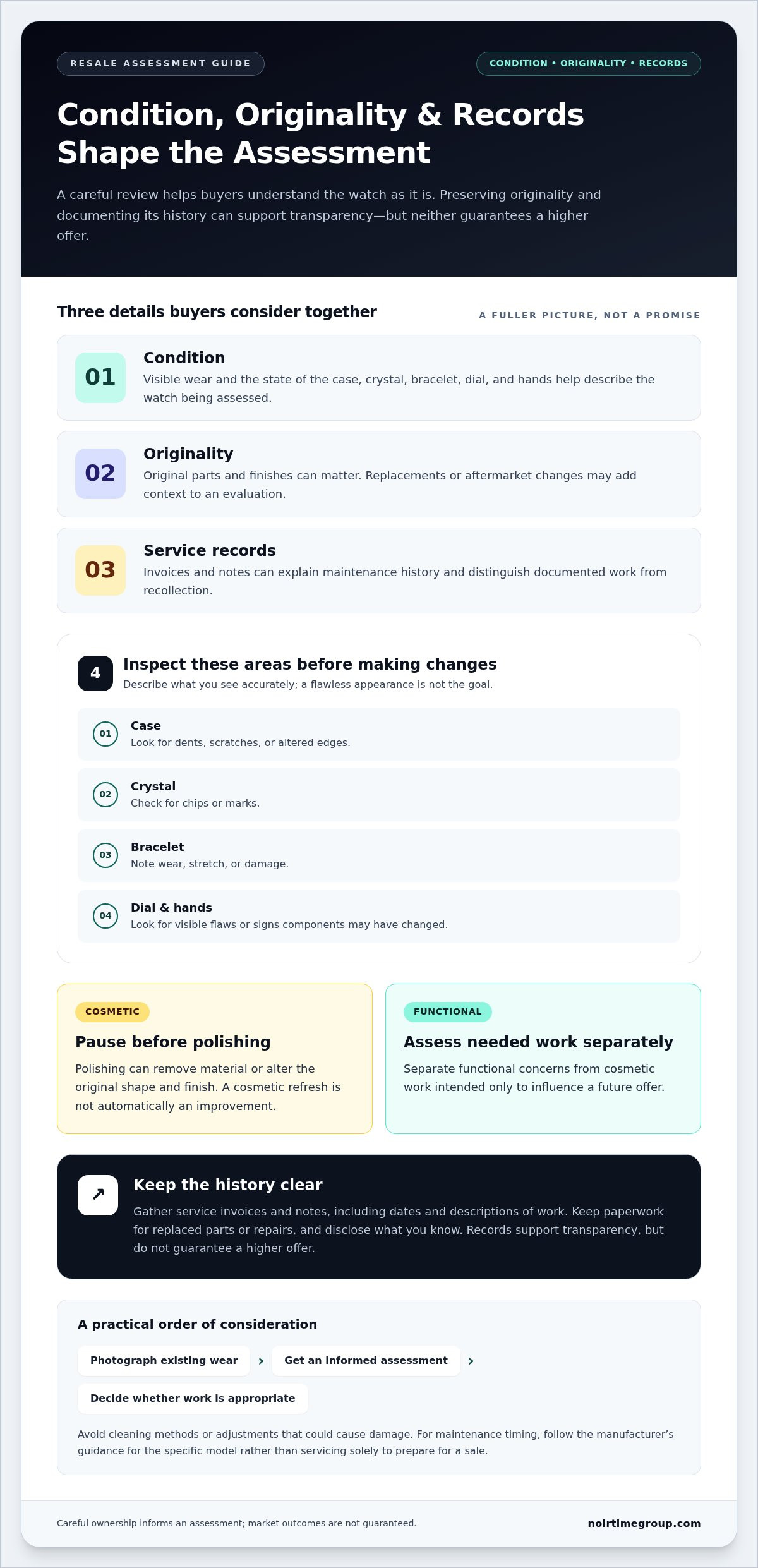
A watch can look well cared for and still have details a buyer will want to assess closely. Check the case for dents, scratches, or altered edges; the crystal for chips or marks; and the bracelet for wear, stretch, or damage. Look at the dial and hands for visible flaws or signs that components may have been changed. Be candid about what you see. An accurate picture of the watch’s condition is more useful than trying to make it appear flawless.
Condition, originality, and clear service records work together to give buyers greater confidence in what they’re assessing. Original parts and finishes can matter, particularly to buyers who value a watch’s integrity. Aftermarket changes or replacement parts may complicate an assessment, so avoid modifying the watch just to make it seem more distinctive. If you know a part was replaced or work was done, keep the paperwork and disclose it.
Should you polish or repair a watch before selling?
Not automatically. Polishing can remove material or alter the original shape and finish, so a cosmetic refresh isn’t always an improvement. Before consequential work, photograph the existing wear and get an informed assessment of the watch as it is. Separate functional concerns, such as a component that needs attention, from cosmetic work intended only to influence a future offer. If repair is appropriate, Noir Time Group’s certified watch repair is one option.
Keep the watch’s condition intact while you decide. Avoid cleaning methods or adjustments that could cause damage, and don’t replace original components simply because a newer part looks better. Buyers may weigh visible wear alongside originality, so there’s no universal rule that a polished watch will be more appealing.
How does service history support a resale assessment?
Collect service invoices and notes in one place, including dates and descriptions of the work. These records can explain what maintenance the watch has received and distinguish documented work from an owner’s recollection. They support transparency but don’t guarantee a higher offer. For maintenance timing, follow the manufacturer’s guidance for the specific model rather than servicing solely to prepare for a sale.
If you’re considering how to maximize watch resale value, treat service as a careful ownership decision, not a price-raising shortcut. Keep the records even if you decide not to service the watch before selling. A buyer or evaluator can then consider its condition, originality, and documented history together.
Do Box, Papers, and Brand Reputation Really Increase Watch Resale Value?
A complete set gives a buyer more context than a watch presented alone, but it doesn’t guarantee a higher offer or future appreciation. The original box, papers, receipts, service records, and accessories each tell a different part of the ownership story. A watch-only example can still be assessed on its own merits. Completeness is useful context, not a promise of a particular outcome.
If you’re learning how to maximize watch resale value, it helps to know what each item can and can’t establish:
| Item | What it helps establish | Limitations |
|---|---|---|
| Original box | That the presentation set is more complete | Doesn’t establish the watch’s condition or history |
| Warranty papers or documents | Details recorded when the watch was sold or documented | Must correspond to the watch; papers alone don’t confirm its current condition |
| Purchase receipts | Purchase details and ownership context | Don’t show every subsequent change or repair |
| Service records | Documented maintenance and work performed | Don’t guarantee a higher offer |
| Links and accessories | Included components and items that came with the watch | Don’t determine buyer interest by themselves |
What should you keep with a luxury watch?
Gather the original box, warranty or other papers, purchase documentation, spare bracelet links, and included accessories. Keep service paperwork with them. Records are most useful when they’re legible, organized, and clearly connected to the specific watch. If paperwork is missing, describe what you have accurately rather than filling gaps with claims you can’t verify.
Don’t treat a watch-only presentation as a problem. Make a clear inventory of what’s included and what isn’t, so an interested buyer can assess the set without guesswork.
Can brand reputation guarantee a better resale outcome?
Rolex, Patek Philippe, and Audemars Piguet are widely recognizable names, but reputation isn’t a return guarantee. Appeal can vary by reference, condition, availability, and buyer preferences at the time. A sought-after model in one period may draw different interest later, and a complete set can’t remove that uncertainty.
Past desirability doesn’t guarantee future buyer interest. Consider brand and completeness alongside the individual watch and current market conditions. A professional evaluation that includes authentication can bring those details together without assuming a particular resale result.
Pre-Sale Checklist to Maximize Your Watch’s Resale Value
A little preparation can make a sale or trade assessment clearer. You don’t need to make the watch look new. Present it accurately, with the details and items a buyer may want to review.
- Identify the watch. Note the brand, model, and reference if you know them. Use your paperwork or existing records to help, and avoid guessing if a detail is unclear.
- Gather the records. Put available purchase, warranty, authenticity, and service documentation together. Keep records legible and organized, and don’t make provenance claims you can’t support.
- Inspect and describe its condition. Look over the case, crystal, bracelet, and dial. Record visible wear, repairs, or known replaced parts honestly. Don’t conceal marks or make cosmetic changes just to influence an assessment.
- Document what’s included. List the box, papers, spare links, and accessories you have, and note anything missing. Take clear photographs from multiple angles before cleaning the watch or handling it extensively.
How should you prepare the watch and its records?
Keep the watch and its documentation together, but don’t risk damage by trying to open or adjust it for photographs. Use clear, well-lit images that show the watch as it is, including noticeable wear. A straightforward description sets expectations and gives an evaluator or prospective buyer a useful starting point.
Should you sell, trade, or keep the watch?
Choose based on what matters to you, not on a promise of investment performance. A direct sale may suit you if you want to part with the watch. A trade may make sense if you’d rather put it toward another timepiece. Keeping it is also valid if you enjoy wearing it or aren’t ready to let it go. Consider your personal attachment, timing, and uncertainty in current buyer demand before deciding.
If you’re weighing a sale or trade, a professional evaluation can bring authentication and the watch’s condition, records, and completeness into one informed assessment. Arrange a professional watch evaluation as a practical next step, without assuming it guarantees a particular offer.
Selling or Trading a Luxury Watch with Noir Time Group
A professional assessment can turn your preparation into a clearer picture of the watch you own. Noir Time Group’s evaluations include authentication, bringing the watch’s identity together with its condition, completeness, and available ownership or service records. Considering these details as a whole can help inform a sale or trade decision, rather than relying on brand reputation or a general market impression alone.
What happens during a professional watch assessment?
An assessment considers what the watch is, whether it’s authentic, its visible condition, and the documentation and accessories presented with it. Clear records and an honest account of wear, repairs, or missing items provide useful context. The assessment reflects the watch at that point in time. It isn’t a guaranteed offer or prediction of future market prices.
That distinction matters if you’re researching how to maximize watch resale value. An evaluation can support an informed conversation, but market demand and the final terms of a sale or trade aren’t guaranteed. Having the watch and records ready keeps the discussion grounded in the details of your particular piece.
How can a sale or trade fit your next watch decision?
If your priorities have changed, a direct purchase may suit you better than continuing to own the watch. A trade offers another route: you can discuss moving from your current timepiece toward another watch, based on what you want to wear next. Noir Time Group specializes in Rolex, Patek Philippe, and Audemars Piguet, and offers watch sourcing alongside trade-ins and direct purchases.
Certified repair is also available when a watch needs attention. Repair can support ongoing care, but it shouldn’t be treated as a guaranteed way to increase resale value. Consider the watch’s needs, the records you have, and your reason for making a change before deciding which route fits.
If you’re ready to discuss a possible sale or trade, explore watch sales, sourcing, and trade options with Noir Time Group. A clear conversation about the watch and your next step can help you make a decision with realistic expectations, whether you’re moving on or choosing another timepiece.
Make Your Next Watch Decision with Confidence
Knowing how to maximize watch resale value starts with focusing on what you can control: preserve the watch’s condition and originality, keep records and accessories together, and describe it honestly. Brand recognition and a complete set may help buyers assess a timepiece, but neither guarantees a particular offer or future price. A current evaluation can help you weigh the watch’s details against your plans.
Noir Time Group is a New York luxury-watch retailer specializing in Rolex, Patek Philippe, and Audemars Piguet. Its evaluations include authentication, and owners can consider a trade-in or direct purchase. Certified watch repair is also available for ongoing care, not as a promise of increased resale value.
If you’re considering your next step, explore luxury watch sales, sourcing, and trade options. With clear expectations and a thoughtful assessment, you can choose the path that fits your priorities.
Frequently Asked Questions
How can I maximize my watch’s resale value?
To maximize your watch’s resale prospects, preserve its original condition, keep available records and accessories together, and describe its history accurately. Avoid cosmetic work or replacement parts unless there’s a clear reason, since changes may affect originality. Identify the model and reference as precisely as you can, and photograph any wear honestly. These steps help buyers assess the specific watch, though market demand and the eventual offer remain uncertain.
Does a watch box and papers increase resale value?
A box and papers can make a watch’s presentation more complete and provide useful context, but they don’t guarantee a higher offer. Papers should correspond to the watch, while the box doesn’t establish its condition or service history. Purchase receipts, service invoices, spare links, and accessories can also explain what comes with the watch. If an item or document is missing, state that clearly rather than making unverifiable claims.
Should I service my watch before selling it?
Not automatically. First consider whether the watch has a functional issue or whether you’re thinking about service only to influence a sale. A recent repair or service invoice can document work, but servicing doesn’t guarantee a higher offer. Keep existing records together and follow the manufacturer’s guidance for maintenance of your model. If you’re unsure whether work is appropriate, a professional assessment can help you understand the watch’s condition before deciding.
Can polishing a luxury watch reduce its resale value?
It can, depending on the watch and the work performed. Polishing removes material and may alter the case’s original shape or finish, so it isn’t a universal improvement. Before considering it, photograph the existing condition and seek an informed assessment, especially if the watch may be valued for originality. Don’t polish solely to hide ordinary wear. Describe marks honestly, and distinguish cosmetic changes from repairs needed to address a functional concern.
How do I find out what my watch is worth?
Start by identifying its brand, model, and reference, then gather records and note its condition, originality, and included accessories. These details help frame a current assessment, but no estimate can guarantee a future sale price. A specialist evaluation can consider authenticity alongside condition and documentation. Noir Time Group’s watch evaluations include authentication, offering an informed route for owners considering a direct sale or trade.
Do Rolex, Patek Philippe, and Audemars Piguet watches always hold their value?
No. Rolex, Patek Philippe, and Audemars Piguet have strong brand recognition, but that doesn’t guarantee that every watch will retain or increase its value. A specific reference, condition, completeness, availability, and changing buyer interest all affect its appeal. Past demand isn’t a promise of future interest, and market outcomes vary. Assess the individual watch and current conditions rather than relying on the brand name alone.
Is it better to sell or trade in a luxury watch?
It depends on what you want next. A direct sale may suit you if your priority is to part with the watch, while a trade-in may fit if you’re looking to move toward another timepiece. Keeping it is also reasonable if you still enjoy owning it or prefer not to decide now. Noir Time Group facilitates direct purchases and trades, with evaluations that include authentication, but outcomes aren’t guaranteed.
