

A luxury watch doesn't need to appreciate to be worth buying. But justifying a luxury watch purchase can feel difficult when the price is substantial, the watch isn't essential, and resale claims blur the line between personal enjoyment and investment. The more useful question isn't whether a watch will make money. It's whether owning it makes sense for you.
It's reasonable to pause before committing, especially when you also need to consider servicing, authentication, and what happens if your tastes or finances change. A watch can provide years of enjoyment, but neither brand reputation nor market headlines guarantee a return.
This guide offers a practical framework for weighing a purchase against your finances and priorities, comparing it with alternatives, and setting realistic expectations for ownership. You'll also learn what to verify when considering a new or pre-owned watch, including provenance, warranty terms, service history, and ongoing care. By the end, you'll have a clearer basis for deciding whether to buy, wait, or walk away.
Key Takeaways
- Justifying a luxury watch purchase starts with distinguishing what you can afford from what you genuinely value.
- Use a decision framework to weigh your budget, intended use, model fit, seller confidence, and ownership plan.
- Compare enjoyment, practical utility, collecting interest, and resale potential, while treating future resale value as uncertain.
- Before committing, consider ongoing care and check the watch’s documentation, provenance, warranty terms, and service history.
- Expert guidance can help you assess model suitability, compare available watches, or discuss a sourcing request.
What justifying a luxury watch purchase really means
Wanting a luxury watch and needing one are different questions. You may be drawn to its design, the skill behind its movement, or the way it marks a personal milestone. Those reasons can be meaningful, but they don’t automatically make the purchase a sound fit for your finances or daily life.
Justifying a luxury watch purchase means deciding that its affordability, personal meaning, practical use, and ownership responsibilities align with your priorities, without relying on guaranteed resale gains. Emotional and design value can be real even when a watch adds little practical function. Resale is a separate consideration: demand can shift, and no future outcome is assured.
Is a luxury watch a need, a reward, or a personal milestone?
Start by naming your reason. Are you marking an achievement, celebrating an occasion, rewarding yourself, or drawn to a particular form of design and craftsmanship? The answer matters because heritage, finishing, and a watch’s story may be central to one buyer, while another cares most about how it looks and feels on the wrist.
Personal significance deserves consideration, but it can’t replace financial judgment. A milestone may explain why you want the watch; it doesn’t establish that buying it is suitable right now.
What does a watch add to everyday ownership?
A phone tells time with little effort and offers functions a mechanical watch doesn’t. A watch can offer a different experience: a tactile object, a daily ritual, and an appreciation of mechanical watch craftsmanship. Whether that difference matters is personal. Consider whether you’d enjoy wearing and interacting with the watch, not just owning it.
Wearing and collecting are different motivations. A daily wearer may prioritize comfort, versatility, and how the watch fits into work or leisure. A collector may focus more on design details, provenance, or how a piece fits a wider collection, while accepting that it may spend more time stored than worn. Neither approach is inherently better, but each brings different expectations for care and use.
Picture an ordinary week, not just a special occasion. How often would you wear the watch, and in which settings? If you’d hesitate to wear it in the situations that make up most of your life, ask whether the appeal lies in using it, collecting it, or simply imagining ownership. That distinction helps make the decision more honest.
A practical framework for evaluating a luxury watch purchase
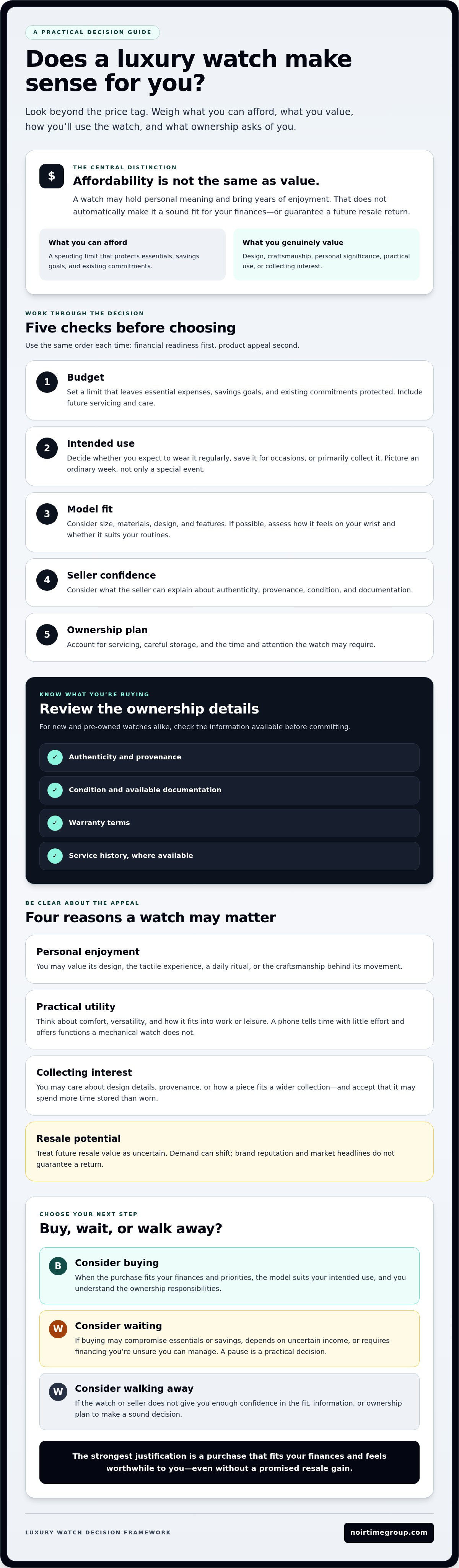
A useful decision process keeps excitement from eclipsing practical details. Work through these five checks before choosing a watch:
- Budget: Set a spending limit that leaves essential expenses, savings goals, and existing commitments protected.
- Intended use: Decide whether you’ll wear the watch regularly, reserve it for occasions, or primarily collect it.
- Model fit: Consider whether its size, materials, design, and features suit your preferences and routines.
- Seller confidence: Assess what the seller can explain about authenticity, provenance, condition, and documentation.
- Ownership plan: Account for future servicing, careful storage, and the time and attention the watch may require.
This order separates financial readiness from product appeal. It also gives you a reason to pause if the conversation starts to focus on urgency or status rather than your needs. The University of Minnesota Carlson School of Management discusses the psychological impact of luxury products, a useful reminder to consider what is motivating your choice as well as what you like about the watch.
How can you tell whether the purchase fits your finances?
Choose a limit based on your circumstances, not on what a seller says you should spend. Include ownership needs in that calculation, since servicing and care are part of owning a mechanical watch. If buying would require financing you’re unsure you can manage, depend on uncertain income, or sacrifice essentials or savings commitments, consider waiting. A pause is a practical decision, not a missed opportunity.
Which watch and seller best fit your priorities?
Compare the watch with how you’ll actually use it. A model that looks appealing in photos may not suit your preferred size or feel comfortable for regular wear. If possible, assess how it sits on your wrist and whether its weight and materials feel right to you. For new and pre-owned options alike, ask what documentation is provided and review condition, provenance, warranty terms, and any available service history. These details help you understand what you’re buying, though they can’t remove every ownership risk.
Noir Time Group offers expertise across Rolex, Patek Philippe, and Audemars Piguet, with guidance to help buyers assess model fit and ownership expectations. If the right option isn’t in the available selection, a sourcing request may also be worth discussing. Once you’ve worked through your criteria, you can explore Noir Time Group’s luxury watch selection.
Personal enjoyment versus resale value: compare the real trade-offs
A watch can be worth owning to you without being a dependable financial asset. Keep enjoyment and potential resale separate: enjoyment is a personal benefit you can assess now, while resale depends on future demand and the circumstances of a later sale. Neither brand reputation nor past market activity guarantees what an individual watch will be worth later.
| Consideration | What to weigh |
|---|---|
| Personal enjoyment | Design, craftsmanship, and the pleasure you expect from wearing or owning it. |
| Practical utility | Whether it fits your routine and offers a wearing experience you value beyond checking the time. |
| Collecting | How the watch fits your interests, collection, and willingness to care for a piece you may not wear daily. |
| Resale | Uncertain future demand, condition, documentation, model-specific interest, and selling circumstances. |
Use this comparison to keep justifying a luxury watch purchase grounded in what you’ll actually get from ownership. If the decision only makes sense under an optimistic resale assumption, reassess whether you’d still be satisfied if the market changed.
Do luxury watches hold their value?
Some watches may retain value, but outcomes vary and are never assured. General market movement doesn’t predict the future value of a particular reference. Demand can shift, and condition, complete documentation, and the circumstances of a future sale can all matter. Before factoring resale into your decision, check current information for the exact model and reference, and treat estimates as uncertain rather than promised.
How does buying new compare with buying pre-owned?
A new watch lets you assess its condition at the point of purchase and review the warranty coverage offered with it. With a pre-owned watch, examine the condition closely and ask about provenance, available service records, documentation, and the precise scope of any warranty. Missing records don’t automatically settle the question, but they do leave details to clarify. Authentication and supporting paperwork can help inform a decision, not erase every risk.
Compare the specific watch and seller, not just the labels “new” and “pre-owned.” Ask what is included, what condition has been assessed, and what service history can be substantiated. For New York buyers, confirm transaction details and any applicable taxes with the seller or a qualified adviser before completing a purchase.
Address the biggest doubts before committing to a luxury watch
A watch can be meaningful without being financially necessary. Enjoyment, craftsmanship, and the personal story behind a purchase can all matter, but they don’t make it sensible to stretch your budget or expect the watch to justify itself through future resale. A more useful test is whether you’d still feel comfortable with the decision if its market value changed or you chose never to sell it.
What if the watch feels too expensive or indulgent?
Separate the initial excitement from a choice you can sustain. Write down why you want this particular watch, how you expect to use it, and what you’d give up to buy it. Then take a cooling-off period and revisit your reasons when the urgency has faded. If the purchase still fits your budget and priorities, you can consider it with a clearer head. If not, waiting, choosing another model, or declining altogether are valid outcomes, not failures.
Compare ownership with realistic alternatives: keep saving, select a different watch, or consider a pre-owned option after checking its condition and records. The point isn’t to find a way to buy at any cost. It’s to see whether one option serves your priorities without compromising other commitments.
What ongoing responsibilities come with ownership?
Mechanical watches may need professional servicing. Responsible ownership also means following care guidance, storing the watch thoughtfully, and wearing it with attention to its condition. Before buying, ask what the warranty covers, what care the watch requires, what service documentation is available, and which repair options apply to that specific piece. Warranty and repair support can be useful, but they don’t remove every ownership responsibility.
For New York owners, confirm that appropriate repair support is accessible before you commit. Noir Time Group offers certified watch repair, but ask whether the service available applies to the particular watch you’re considering. Clarify the terms and any limits rather than assuming coverage is identical across watches.
Use this checklist to surface unanswered questions before you decide:
- Can I buy it without disrupting essential expenses, savings goals, or existing commitments?
- Do I know why I want this model, and how often and where I’ll wear it?
- Have I reviewed the watch’s condition, provenance, documentation, warranty terms, and service history?
- Do I understand its care needs and know what repair support is available?
- Would I still be satisfied if I never resold it?
If any answer is unclear, pause and get the information you need. For guidance on model fit and ownership expectations, explore expert luxury watch guidance before making your decision.
Make a confident luxury watch decision with expert support
A clear decision comes from checking more than whether a watch appeals to you. Before proceeding, make sure its purpose is clear, it fits your finances, the model suits how you plan to wear or collect it, and you understand its documentation and after-sales needs. If one of these points remains uncertain, ask questions before committing.
A knowledgeable retailer can help you compare available watches and understand differences in model fit and ownership expectations. Treat that conversation as a way to gather information, not a reason to rush. The aim is to make justifying a luxury watch purchase easier through evidence and clarity, not promises about future value or an assumption that every watch comes with identical support.
What should you confirm with a luxury watch retailer?
Ask about the specific watch in front of you, rather than relying on general assurances. Confirm its authenticity, provenance, condition, and which documents are included. Then clarify any applicable warranty terms, available repair support, and the seller’s return and transaction policies. For a New York purchase, ask which consultation or purchasing options are currently available and confirm the details before proceeding.
Noir Time Group provides authenticity assurance for timepieces it sells, along with expert guidance and after-sales care. The exact terms of authenticity assurance and any manufacturer-backed warranty can vary by watch, so ask what applies to the specific piece you’re considering. Documentation and support can help you make an informed choice, but they don’t eliminate every ownership risk.
What if the right model is not currently available?
If you can’t find a suitable watch in the current selection, Noir Time Group offers a watch sourcing service. Before making a request, be clear about the model or features you’re seeking, what condition or documentation you expect, and which details you’re willing to be flexible about. Discuss availability, process, and expectations directly rather than assuming a particular watch can be sourced or that timing is guaranteed.
Taking time to ask these questions is part of buying thoughtfully. If you’re ready to discuss your preferences or a sourcing request, discuss your luxury watch search with Noir Time Group.
Make a Decision That Feels Right for You
Justifying a luxury watch purchase doesn’t mean proving you need one. It means choosing with a clear view of your finances, your reasons for buying, and the responsibilities that come with ownership. Let personal enjoyment carry weight, but don’t rely on uncertain resale value to make the numbers work.
Before committing, check that the watch suits how you’ll use it, review its documentation and condition, and understand the applicable warranty and after-sales arrangements. If important details remain unclear, take time to ask questions or reconsider. Waiting or choosing another option can be as thoughtful as buying now.
Noir Time Group offers expert guidance, authenticity assurance for timepieces sold by the business, certified repairs, and after-sales care. These can help you explore your options while giving you details to verify for the specific watch. Explore luxury watches and expert guidance at Noir Time Group, and take your next step when the choice fits your priorities. A confident decision is one you can feel good about long after the initial excitement.
Frequently Asked Questions
Is buying a luxury watch worth it?
It can be worth it if the watch fits your finances and delivers value you care about, such as design, craftsmanship, collecting interest, or the pleasure of wearing it. It isn’t automatically worthwhile because of a brand name or possible resale value. Consider how often you’ll use it, what ownership may require, and whether you’d still feel satisfied if its market value changed.
Can a luxury watch be considered an investment?
A luxury watch shouldn’t be treated as a guaranteed investment. Some models may retain value, but future demand and resale outcomes can change, and performance varies by individual watch and market circumstances. Condition, documentation, model, and sale timing may all matter. If resale is part of your decision, research current information for the specific reference, and make sure the purchase still makes sense without assuming a return.
How do I justify buying an expensive watch to myself?
Start by writing down why you want the watch and what you expect to gain from owning it. Then check that the purchase fits your budget without displacing essentials, savings goals, or existing commitments. This is the practical core of justifying a luxury watch purchase: balance personal meaning and intended use with financial readiness and care responsibilities. If you need to stretch or rely on uncertain income, consider waiting.
What should I check before buying a pre-owned luxury watch?
Review the watch’s condition, provenance, authenticity information, and any included documentation. Ask about service history, warranty coverage, and which details the seller can verify for that specific watch. Check that the watch and documents correspond, and clarify any gaps rather than making assumptions. A reputable seller should be able to explain what is known, what is included, and what remains uncertain. Documentation helps inform a decision, but doesn’t remove every risk.
Do luxury watches require regular maintenance?
Mechanical luxury watches may need professional servicing, but the appropriate care depends on the particular watch and its condition. Ask the seller for the manufacturer’s care guidance, available service records, applicable warranty terms, and repair options. Avoid assuming a fixed schedule or cost without checking the model-specific information. Plan for ownership as an ongoing responsibility, and confirm that suitable repair support is available before you buy.
Is buying a luxury watch in New York different?
The same decision checks apply in New York: assess affordability, verify the specific watch, and clarify warranty, service, and transaction terms. Before completing a purchase, ask the seller about applicable taxes and transaction details, or consult a qualified adviser if you have questions. Noir Time Group is a New York luxury watch retailer offering expert guidance, authenticity assurance for timepieces it sells, after-sales care, and certified repairs. Confirm the terms that apply to the watch you’re considering.
