

A 30-meter rating doesn’t mean a watch is safe to wear 30 meters underwater. It describes pressure resistance under test conditions; in practical use, that rating is generally for splashes and handwashing, not swimming or showering. This guide gets water resistance in watches explained through the key distinction between a pressure rating and the activities a watch suits.
It’s easy to assume a higher number guarantees protection in any wet setting, but seals can age and real-world conditions differ from laboratory tests. This guide has water resistance in watches explained through everyday examples, diving-watch tests, and care considerations. It also shows when testing or servicing matters, so you can make informed decisions about using and caring for a watch without mistaking its rating for a promise of waterproofing.
Key Takeaways
- Read metres, bars, and ATM as pressure-rating terms, then use the watch’s stated activity guidance to decide what exposure is appropriate.
- For diving, look beyond a depth number: ISO 6425 identifies requirements for a diving watch, including time control and water resistance.
- Pressure tests use controlled conditions, so movement, temperature changes, and the condition of seals matter when judging real-world protection.
- Make water-resistance checks part of watch care, and consider servicing when seals or other components may have deteriorated.
What Does Water Resistance Really Mean?
A water-resistance rating describes pressure a watch can withstand in controlled testing, not a guaranteed swimming depth. A 30-meter rating, for example, is generally suited to splashes and handwashing, not swimming, showering, or submersion. This guide has water resistance in watches explained through the distinction between a pressure rating and real-world use.
That distinction helps you match a rating to your plans: a depth number alone doesn’t establish which activities are suitable. Ratings in meters, feet, bar, and ATM express pressure, while the watch’s stated use guidance helps translate test results into practical decisions. The examples below explain water resistance in watches in practical terms, so you can interpret a rating in light of the activity you have in mind.
Interpreting Depth Ratings in Practice
A depth rating expresses pressure resistance, not a promise that you can wear the watch at that underwater depth. This matters because a still-water laboratory test differs from movement during real activities. A 30-meter rating suits light splashes and handwashing, but not swimming or submersion. For everyday dress timepieces and men's accessories, such as those featured on cudworth.com.au, this baseline level of protection is designed to handle rain and routine splashes rather than aquatic sports. A 100-meter rating is listed for swimming and snorkeling, yet not high-velocity water or diving. Match the rating to the activity, not just the number.
Rating Units and Their Meanings
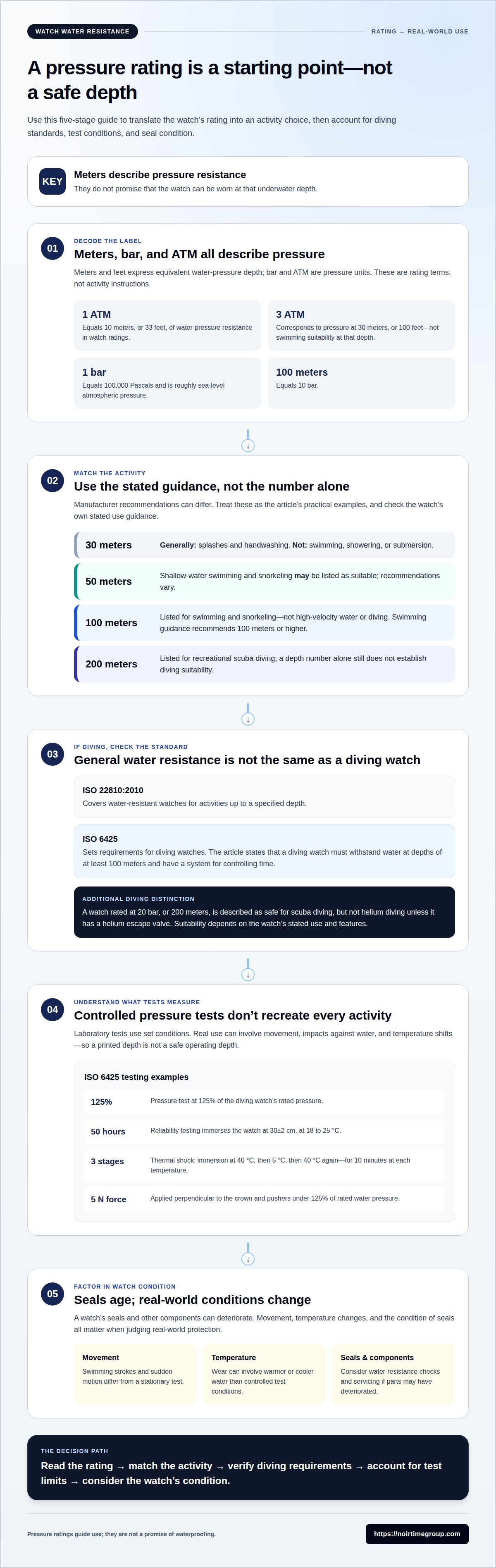
Bar and ATM describe pressure; meters and feet express the equivalent water-pressure depth. One atmosphere equals 10 meters, or 33 feet, of water pressure resistance in watch ratings. A 3 ATM watch corresponds to pressure at 30 meters, or 100 feet, but that doesn’t make it suitable for swimming at that depth. One bar equals 100,000 Pascals and is roughly sea-level atmospheric pressure. A 100-meter rating equals 10 bar.
Activities Suited to Different Ratings
Activity guidance links a rating to practical exposure, but manufacturer recommendations can differ. A 30-meter watch is generally for splashes and handwashing. At 50 meters, shallow-water swimming and snorkeling may be listed as suitable, though recommendations vary; don’t assume every 50-meter watch suits those activities. A 100-meter rating is listed for swimming and snorkeling, not high-velocity water or diving. For swimming, the guidance recommends 100 meters or higher. A 200-meter rating is listed for recreational scuba diving.
Diving and certified diving watches
ISO 22810:2010 covers water-resistant watches for activities up to a specified depth, while ISO 6425 sets requirements for diving watches. According to the International Organization for Standardization, a diving watch must withstand water at depths of at least 100 m and have a system for controlling time.
Scuba Diving Suitability
A depth rating alone doesn’t establish that a timepiece is suitable for scuba diving. A 100 m rating isn’t recommended for scuba; watches rated at 200 m or higher are listed as suitable for recreational scuba diving. That distinction matters because scuba exposes a watch to conditions beyond ordinary water contact. Match the watch’s stated diving use to your activity, rather than treating its depth number as permission to dive.
Mixed-gas diving has additional demands. A watch rated at 20 bar, or 200 m, is described as safe for scuba diving, but not helium diving unless it has a helium escape valve. Higher-rated watches may be designed for more demanding diving conditions, but suitability depends on the watch’s stated use and features. These ratings and features address different diving conditions.
Diving Watch Testing and Standards
ISO 6425 testing checks more than water pressure, helping distinguish certified diving timepieces from watches intended for general water use. Its pressure test uses 125% of a diving watch’s rated pressure. Reliability testing immerses a watch at 30±2 cm for 50 hours at 18 to 25 °C. Thermal-shock testing immerses it at 40 °C, 5 °C, then 40 °C again, for 10 minutes at each temperature.
ISO 22810:2010 covers water resistance for specified activities and depths, while ISO 6425 addresses diving watches. For example, ISO 6425 also applies a 5 N force perpendicular to the crown and pushers under 125% of rated water pressure. This testing context helps explain why a general water-resistance label isn’t equivalent to a diving-watch standard.
If a diving watch needs attention after use, certified watch repair is a relevant next step.
Pressure testing and safety margins
A water-resistance rating comes from controlled pressure tests, not a direct trial at the printed depth. A watch marked 20 metres isn’t necessarily safe 20 metres underwater; the figure describes pressure resistance relative to sea-level pressure. That distinction matters because laboratory testing keeps conditions steady, while a wearer and watch move through changing conditions.
Static Laboratory Pressure Testing
Static testing evaluates a stationary watch under set pressure, temperature, and time conditions. For example, the described testing range is 18°C to 25°C, with the watch stationary. An older ISO 2281 test immersed a watch 10 cm underwater while applying 5 N perpendicular to its crown and pushers for 10 minutes. These controlled steps test resistance under a defined setup, not every real-world exposure.
For an ISO 2281 watch without an additional pressure indication, the water-overpressure test used 2 bar for 10 minutes. Air-overpressure testing also exposed the watch to 2 bar, limiting airflow to 50 μg/min. ISO 2281 was replaced by ISO 22810:2010. The standards’ test conditions help explain why a rating should guide use rather than serve as a literal underwater-depth guarantee.
Water Pressure and Movement
Water pressure can differ in practice from the steady load applied during a static test. Swimming strokes, sudden movements, or impacts against water can create conditions unlike those in a test chamber. Temperature shifts matter too: pressure testing uses a controlled range, while a watch may encounter warmer or cooler water during wear. That’s why a printed depth shouldn’t be treated as a safe operating depth.
Testing can include a safety margin. For ISO 6425 diving-watch pressure testing, the applied pressure is 125% of the rated pressure. That margin is part of a defined test, not an instruction to use the watch beyond its rating. A crown or pusher also forms part of the case’s sealing system, so pressure tests can assess those areas under specified conditions. In real use, keep the crown secured and avoid operating controls underwater.
Water-resistance testing and servicing
Water resistance can change as seals age, cases take impacts, or a watch is opened. A printed rating describes the tested condition, so periodic testing and attention to gaskets help assess protection as the watch is worn.
Moisture or condensation beneath the crystal can signal that water has entered the case. If a watch gets wet and shows moisture inside, stop wearing it and arrange prompt professional attention. Don’t operate its crown or pushers underwater. After exposure to salt water or chemicals, rinse the exterior with fresh water and dry it gently.
Opening the case for a battery replacement can affect water resistance because the case must be closed with its seals correctly seated. A battery change alone doesn’t establish that the watch remains protected. A gasket inspection and water-resistance test help assess the seal afterward.
For general water-resistant watches, a visual gasket inspection can reveal wear or damage. Gaskets are recommended for replacement every few years or as needed, while silicone lubrication is typically performed during battery replacement. These steps address the seals that help keep water out; they don’t increase the watch’s original rating.
Testing is especially relevant before swimming, sports, or other underwater use, and after a case has been opened or damaged. Annual water-resistance checks are recommended. A controlled test can show whether the case holds pressure, but the result reflects its condition at the time of testing, not permanent protection from future wear.
After saltwater exposure, rinse the watch with fresh water to help remove residue from the case and bracelet. Avoid showers and baths, since heat, soap, and shampoo can affect gaskets over time. Sudden temperature changes can also stress a watch, so avoid moving it abruptly between hot and cold conditions.
If your watch needs inspection or servicing, arrange certified watch repair to assess its condition and water resistance.
Noir Time Group
Noir Time Group can help when water-resistance concerns call for a repair or a different timepiece. If a watch has been opened, shows signs of moisture, or needs attention after water exposure, its Certified Watch Repair service is a relevant next step. If you’re choosing another watch, the Watch Sourcing Service can help locate a timepiece suited to your preferences. The rating and intended activities still matter.
Noir Time Group also offers the Rolex Submariner Date 126613LN and Rolex Submariner Date 126618LN. A model name alone doesn’t establish what activities are appropriate, so use the watch’s specific water-resistance information when deciding how to wear it.
For help with a watch repair or sourcing request, contact Noir Time Group.
Make Your Next Watch Decision with Confidence
Let your regular routine guide your decision. Consider where you wear a watch, how often it encounters water, and whether its intended use matches those habits. This practical approach keeps a rating from becoming the only factor in choosing or caring for a timepiece.
With water resistance in watches explained in practical terms, you can approach a future purchase or repair with clearer priorities. When shopping for your next everyday model, exploring retailers such as Designer Watch Store UK allows you to compare styles alongside their depth ratings. If a watch’s condition has changed, consider professional attention before exposing it to water again, and focus on the activities you want any new piece to support.
Noir Time Group can help you consider your next step, whether you’re looking for watch advice or exploring a sourcing request. Talk with Noir Time Group about your watch needs, and move forward with a choice that fits your everyday life.
Frequently Asked Questions
What Features Make a Watch More Water-Ready?
A well-sealed case, intact gaskets, and a crown secured as intended help limit water entry. A screw-down crown is a useful design feature, but it doesn’t establish a watch’s activity limits by itself. Seals can wear, and opening the case can affect their fit. A pressure test after case work can assess the watch’s current condition; no single feature replaces the rating and care guidance.
What Is BAR?
Bar is a unit of pressure used to express how much pressure a watch can withstand during testing. One bar equals 100,000 Pascals and is roughly equal to atmospheric pressure at sea level. A bar figure helps interpret a water-resistance rating, but it isn’t a direct instruction to wear the watch at an equivalent underwater depth. Use the stated rating together with the watch’s activity guidance.
What Is an Atmosphere or a Bar?
An atmosphere, written ATM, and a bar are pressure units used in watch ratings. They’re close enough for common watch-rating comparisons, but the terms describe pressure, not a guaranteed safe depth. For example, a 3 ATM rating corresponds to pressure equivalent to 30 meters of water. That conversion doesn’t mean the watch is suitable for use at that depth.
What Do Water-Resistance Ratings Like 30m, 50m, 100m, and 200m Mean on Watches?
These numbers describe pressure ratings, while activity guidance determines practical use. A 30-meter watch is generally for splashes and handwashing. Guidance for 50 meters varies, so don’t assume every model suits swimming or snorkeling. A 100-meter rating is listed for swimming and snorkeling, not diving. Watches rated at 200 meters or higher are listed as suitable for recreational scuba diving.
How Are Watch Water-Resistance Ratings Tested and Measured?
Testing measures whether a watch resists specified pressure under controlled conditions. For diving watches, ISO 6425 testing applies pressure at 125% of the rated value, alongside other checks. A test result describes the watch under those conditions, not its future condition after wear, impact, or case opening. Testing can also assess seals, helping identify whether servicing is needed to restore the case’s integrity.
Can You Swim or Shower with a 30m or 50m Water-Resistant Watch?
A 30-meter watch isn’t suited to swimming or showering; it’s generally intended for splashes and handwashing. For 50 meters, recommendations differ, so avoid swimming unless the watch’s own guidance allows it. Avoid showers and baths with either rating: hot water, soap, and shampoo can affect gaskets. If the watch gets wet, dry it and watch for signs of moisture beneath the crystal.
