
Finding a listing is only the start. To source a rare vintage luxury watch model, you need to know whether a candidate matches the watch you want and whether its condition, originality, provenance, and terms meet your expectations.
It’s reasonable to be cautious. The exact model or configuration may not appear in public listings, and photographs can leave important questions unanswered. A clear brief gives a sourcing specialist useful search criteria, while a consistent checklist helps you compare candidates without rushing into a decision.
This guide explains how to define your search, assess a vintage watch’s condition and documentation, and work with a sourcing specialist before authorizing a purchase. You’ll also learn what to clarify about the process and terms. Noir Time Group’s Watch Sourcing Service helps buyers request specific or hard-to-find timepieces, with expert guidance as they assess a candidate.
Key Takeaways
- Turn your search into a clear brief by separating must-haves from details you’re willing to compromise on.
- Expect distinct steps, from request and search to candidate review and a final decision. Timing and availability can vary.
- Compare candidates against the same criteria, including reference match, condition, originality, documentation, and terms.
- Separate what photos show from what a seller claims and what has been independently verified.
- When you source a rare vintage luxury watch model, clarify the process and purchase terms before authorizing a purchase.
Why sourcing a rare vintage luxury watch model takes more than finding a listing
Rare vintage searches often take patience and careful verification. A watch may be difficult to find in public listings, and a candidate that looks close may differ from your requested model in ways that matter. Sourcing means asking a specialist to look beyond currently visible inventory for a particular watch. It gives your search a clear direction, but doesn’t guarantee a match will be found.
Specifics matter. The reference number, approximate production period, dial, case material, bracelet, and configuration can distinguish one candidate from another. Vintage watches also have a history beyond their age. The history of mechanical watches provides context for how timepieces and their designs have evolved, but historical interest alone doesn’t make a particular example right for you. A close match may have a detail you won’t accept, while a watch with a flexible feature may better suit your priorities.
A sourcing brief is a written record of what makes a watch acceptable, including must-have specifications, flexible preferences, and deal-breakers. It turns “I’m looking for something like this” into practical guidance a specialist can use to assess candidates.
What makes a vintage watch request specific enough to source?
Start with the brand, model family, reference number if known, and approximate production period. Then separate essential specifications from preferences. Decide whether a particular dial or case material is non-negotiable or simply preferred. Include bracelet and configuration details when you’ve confirmed they matter to your search. If you’re unsure about a specification, mark it as a question instead of treating it as settled.
This distinction helps prevent mismatched expectations. A specialist can use firm requirements to screen candidates and flexible preferences to identify alternatives that may still be worth reviewing. Keep the brief precise, but don’t add details just because they sound desirable.
Why public listings may not show every suitable candidate
Published stock shows what a retailer has chosen to display at that moment. A sourcing specialist may also look beyond that inventory for a specific or hard-to-find watch. This gives your request another path, but it can’t ensure that the exact reference will be located or become available.
Before contacting a specialist, write down what must match and what you’re willing to discuss. A focused request gives the search a useful starting point and makes it easier to judge each candidate against your priorities, rather than being swayed by a listing that only looks similar.
How a rare vintage watch sourcing process works from request to candidate
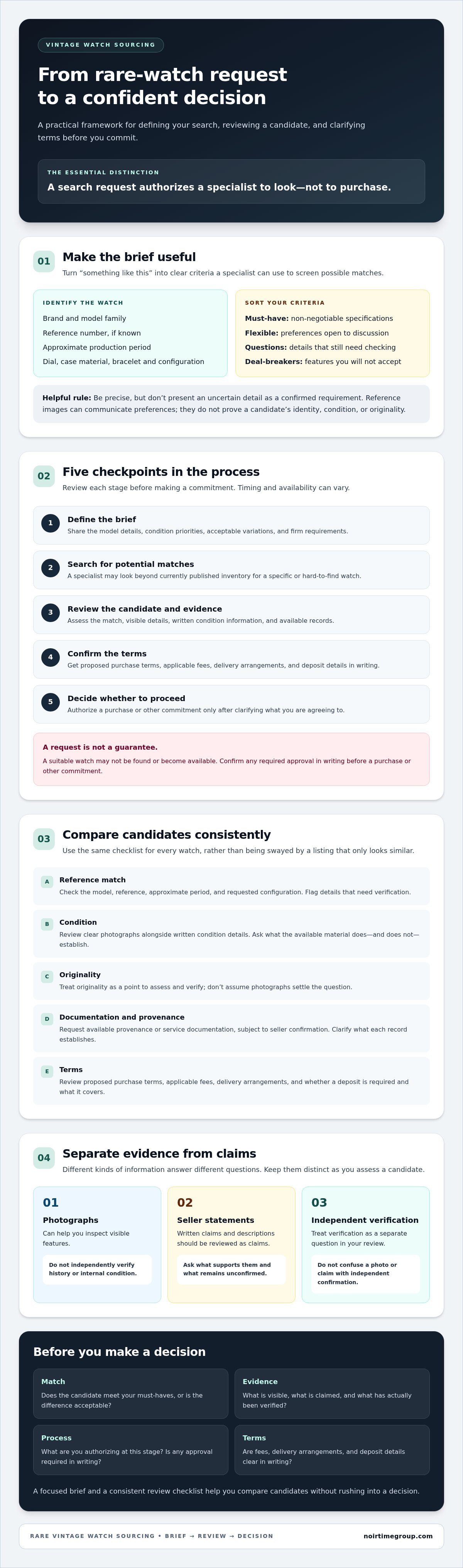
A clear sourcing process moves through five checkpoints: define the brief, search for potential matches, review the evidence, confirm the terms, and decide whether to proceed. Each step gives you a chance to clarify what you’re looking for before making a commitment. Timelines and candidate availability vary, and a request doesn’t guarantee that a suitable watch will be found.
A search request authorizes a specialist to look for a watch. It isn’t authorization to purchase one. Confirm what, if anything, you’re agreeing to at each stage, and get any required approval in writing before a purchase or other commitment.
What information should your watch sourcing request include?
Provide the brand, model, reference number, and approximate production period if known. Add your condition priorities, acceptable variations, and non-negotiable specifications. If you have reference images or examples, share them to communicate your preferences, but label them as guidance, not proof of a candidate’s identity, condition, or originality.
Be specific enough to guide the search without treating unknown details as confirmed requirements. If you’re unsure whether a feature is correct for the reference, note that it needs verification. That gives the specialist a question to investigate instead of an assumption to carry into the search.
What should happen when a possible candidate is located?
Ask for clear photographs and written condition details, along with any available provenance or service documentation, subject to seller confirmation. Clarify what the material does and doesn’t establish. Photos can help you inspect visible features, but they can’t independently verify a watch’s history or internal condition. For background on horological education and the importance of informed review, consult the Horological Society of New York.
Before deciding, request the proposed purchase terms, any applicable fees, and delivery arrangements in writing. Confirm whether a deposit is required, what it covers, when payment is due, and what cancellation conditions apply. Don’t assume these details; they can vary by arrangement and should be clear before you authorize a next step.
Then compare the candidate with your original brief. Note any mismatch, unanswered question, or point that depends on a seller’s statement rather than supporting evidence. If an essential specification can’t be confirmed, pause and ask for clarification. If you want guidance on a specific or hard-to-find timepiece, you can review Noir Time Group’s watch sourcing service as one option for starting a request.
How to compare rare vintage luxury watch candidates before choosing
A reference match is only a starting point. A matching reference number can’t establish whether a vintage watch is suitable overall. Two watches from the same reference may differ in condition, originality, supporting records, and purchase terms. Use the same checklist for each candidate so an appealing photograph or seller description doesn’t overshadow unresolved questions.
| Criterion | What to compare | How to label the information |
|---|---|---|
| Reference match | Reference and requested configuration | Observed, seller-stated, or independently checked |
| Condition | Wear, damage, refinishing, and visible repairs | Visible in photos or requiring clarification |
| Originality | Dial, hands, bezel, case, and bracelet | Seller’s belief or verified finding |
| Documentation | Available history, service records, and accompanying papers | Provided, missing, or not yet reviewed |
| Terms | Price, fees, payment, cancellation, and delivery details | Confirmed in writing or outstanding |
Which condition and originality details deserve close review?
Ask whether the dial, hands, bezel, case, and bracelet are believed to be original or later replacements. Request clear images showing wear, case edges, markings, and any areas described as restored. A polished case, replacement component, or visible patina isn’t automatically a reason to reject a watch. Consider each detail against your priorities: one buyer may value signs of age, while another may prefer a different condition profile. The important thing is to understand what’s present and decide whether it fits your brief.
Keep evidence categories separate. A photograph may show a mark or surface wear; a seller may state that a component is original; an independent review may reach a separate finding. Record which is which, and follow up wherever the distinction could affect your decision.
How do provenance and service records inform a decision?
Review available ownership history, service records, and accompanying documentation, but don’t treat any single document as complete proof of a watch’s history or originality. Missing records are a question to clarify, not automatic evidence of a problem. Ask what documentation exists, who has reviewed it, and whether its details align with the candidate.
Before committing, confirm who performs any authentication review and what it covers. Ask whether it includes the movement and individual components or is limited to visible details and documents. If you’re looking to source a rare vintage luxury watch model, a structured comparison helps you identify what’s established, what remains uncertain, and whether the candidate meets your acceptance criteria.
How to prepare your sourcing brief and make a confident decision
A useful brief makes your priorities clear before a candidate appears. It also gives you a consistent standard for deciding whether to continue, ask more questions, or pass. Before contacting a sourcing specialist, write down what must match and what you might reconsider. That distinction helps keep an appealing alternative from quietly changing the goal of your search.
A practical checklist for writing your request
Use this checklist to turn your preferences into a clear request. If a detail is uncertain, say so rather than guessing.
- Identify the watch: Include the brand, model family, reference number, and approximate production period. Note which details you need help confirming.
- Set your condition expectations: Describe acceptable wear and whether you prefer original components. List documentation you hope to review, while recognizing that availability may vary.
- Separate must-haves from preferences: Keep deal-breakers, such as a required reference, separate from flexible details, such as a preferred bracelet or condition feature.
- Share useful examples: Attach reference images if available, and explain which features they illustrate. Treat images as guidance, not evidence about a candidate.
- Set communication and timing expectations: State how you prefer to be contacted and whether you have a target timeframe. Availability and search timing can vary, and there’s no guaranteed result.
Questions to resolve before approving a candidate
Before authorizing a purchase or other next step, ask for a clear account of what’s verified, what remains uncertain, and which supporting records are available. Confirm who reviewed the watch and what that review covered. If the candidate differs from your brief, ask for the differences to be stated plainly so you can decide whether they’re acceptable.
Get the complete transaction terms in writing before proceeding. Clarify any sourcing fee or deposit, when payment is due, and what cancellation conditions apply. Also verify the arrangements for inspection and delivery, whether returns are permitted and under what conditions, and whether any warranty applies to that specific vintage watch. Don’t assume a policy; ask for its terms in writing.
These checks help you decide with the facts in front of you, rather than feeling pressured to commit because a rare candidate has appeared. If you’re ready to discuss a specific request, contact Noir Time Group about watch sourcing.
Source a rare vintage luxury watch model with Noir Time Group
Noir Time Group is a New York luxury watch retailer specializing in Rolex, Patek Philippe, and Audemars Piguet. Its Watch Sourcing Service is intended for requests involving specific or hard-to-find timepieces, including watches that may not appear in published inventory. This gives you a way to present your criteria to a specialist without assuming a particular vintage reference is available.
A well-prepared brief can make the conversation more productive. Share the brand, model, reference number if known, preferred configuration, approximate production period, and condition priorities. Separate firm requirements from details you’re open to discussing. Then use the candidate-review framework from this guide to ask what’s documented, what’s based on seller statements, and what has been independently verified. Noir Time Group says its timepieces are guaranteed authentic, but ask whether that statement applies to a sourced vintage watch and what the authentication review covers for that specific candidate.
What to expect when contacting Noir Time Group
Be ready to explain both the watch you’re seeking and the features that would rule a candidate out. Before deciding, ask what candidate details, authentication information, and supporting documentation will be provided. Request clear written answers about sourcing fees, deposits, purchase and payment terms, and any cancellation conditions. Also clarify what after-sales support is available and whether a warranty applies to the sourced vintage watch, including its terms.
These questions help distinguish a promising lead from a candidate you can assess with enough information to make a considered decision. If a point remains unclear, ask for clarification before authorizing a purchase or other next step. Availability and sourcing outcomes can vary, so treat the initial conversation as a chance to explain your request and understand the process, not as a promise that a particular watch will be found.
Turn your search into a clear next step
You don’t need to have every specification settled before reaching out. Share what you know, identify uncertain details, and ask what information would help refine your request. A conversation about your model and its availability can help establish whether the search is a fit and give you a chance to confirm the service terms before proceeding.
To discuss your requested model and clarify the sourcing process, Discuss a specific watch request with Noir Time Group.
Make your next watch search a considered one
To source a rare vintage luxury watch model with confidence, start with a precise brief: record your must-have specifications, acceptable condition, and flexible preferences. Then assess each candidate against the same criteria, separating visible details and seller statements from findings that have been independently verified.
Before authorizing a purchase, get the sourcing and transaction terms in writing. Ask what documentation and authentication information will be provided, and clarify any fees, deposits, cancellation conditions, delivery arrangements, and applicable warranty. A careful process can’t guarantee that a specific watch will be found, but it can help you make a more informed decision if a candidate becomes available.
Noir Time Group offers sourcing for specific or hard-to-find timepieces and specializes in Rolex, Patek Philippe, and Audemars Piguet. The company states that its timepieces are guaranteed authentic; ask how that applies to a sourced vintage watch and what the review covers. If you have a model in mind, discuss a specific watch request with Noir Time Group and clarify the process before proceeding. With clear priorities and the right questions, you can pursue your search thoughtfully and stay focused on a watch that suits you.
Frequently Asked Questions
How do I source a rare vintage luxury watch model?
Start with the brand, model, reference number, approximate production period, and essential configuration details. Tell the sourcing specialist which condition and originality factors are non-negotiable and where you’re flexible. Ask what evidence will be provided for each candidate, who handles authentication, and what that review covers. Before authorizing a purchase, confirm applicable fees, deposits, payment terms, cancellation conditions, and other transaction requirements in writing.
Can a watch sourcing service find a model that is not listed for sale?
A sourcing service may search beyond published inventory through its professional network, but no particular model or timeframe is guaranteed. Give the specialist a focused brief and ask how they’ll present alternatives if an exact match isn’t located. Before proceeding, confirm the sourcing terms and any applicable fees. Also ask what happens if no acceptable candidate is found, including whether any deposit or other commitment would be affected.
How can I tell if a vintage luxury watch is authentic?
Authentication should consider the watch as a whole, including its reference, components, condition, and available records. Ask who performs the review, what inspection methods are used, and whether the findings are documented. Photographs and accompanying papers can support an assessment, but shouldn’t be treated alone as conclusive proof. Clarify the seller’s authenticity commitment, what it covers, and whether its terms apply to the specific vintage watch you’re considering.
What information should I provide when requesting a rare watch?
Share the brand, model, reference number if known, approximate production period, and preferred configuration. Reference images can help explain what you like, but identify them as examples rather than proof of a candidate’s details. Describe your condition, originality, and documentation priorities, then note which variations you’d accept. Ask the sourcing specialist what else they need to assess the request, and discuss any budget or fee information privately before proceeding.
Is a vintage watch with replacement parts still worth considering?
It depends on which parts were replaced, the watch’s overall condition, your collecting priorities, and how the changes are documented. Ask which components are believed original, which were replaced or restored, and whether records support that account. Compare the candidate with your own criteria rather than assuming every replacement is disqualifying or acceptable. If a component’s identity or condition is unclear, request more information or a qualified assessment before deciding.
What should I check before approving a sourced watch?
Compare the candidate with your written brief and review clear photographs, condition details, available service records, and provenance information. Ask what has been independently verified and what remains uncertain. Before authorizing payment, confirm the full transaction terms in writing, including sourcing fees, delivery arrangements, inspection options, return conditions, and any applicable warranty. Don’t rely on assumptions about policies; ask for their terms and confirm they apply to the specific watch.
How long does it take to source a rare vintage watch?
Timing depends on the model’s rarity, requested configuration, market availability, and how flexible your criteria are. A sourcing specialist may not be able to predict when a suitable candidate will appear. Ask how progress updates work and whether alternatives can be considered if the exact specification isn’t located. Treat any timeline as an estimate unless the provider confirms a specific commitment in writing, and don’t assume a search will produce a particular result.
Does Noir Time Group source vintage watches that are not in its inventory?
Noir Time Group offers sourcing for specific or hard-to-find timepieces, including watches that may not appear in its public inventory. Share the model and your essential criteria, then ask what candidates may be located. Before committing, confirm availability, authentication details, supporting documentation, fees, purchase terms, and any applicable after-sales support or warranty. The company states its timepieces are guaranteed authentic, so ask how that statement applies to a sourced vintage watch.
