

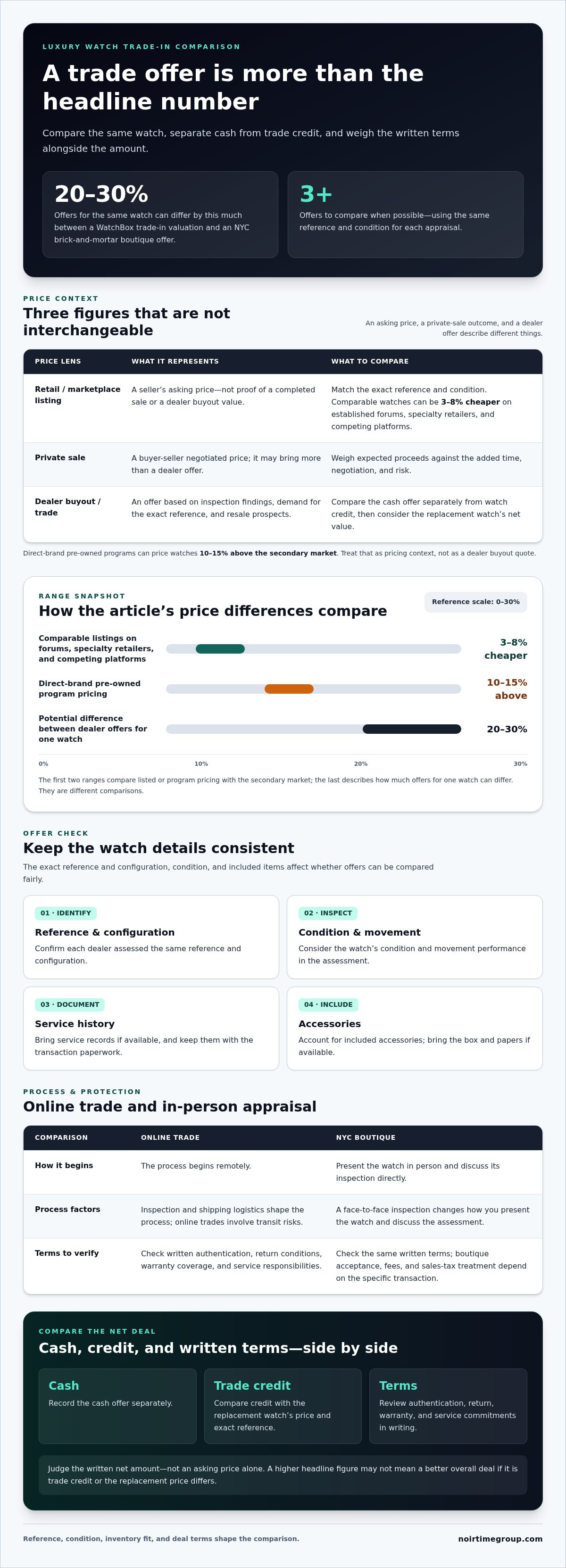
A WatchBox trade-in valuation versus an NYC brick-and-mortar boutique offer can differ by 20-30% for the same watch, so the highest figure isn’t the whole decision. A strong offer also depends on the watch’s condition, completeness, and fit with the dealer’s inventory needs.
When comparing a WatchBox trade-in valuation with an NYC brick-and-mortar boutique, start with the amount you’ll actually receive. Authentication, return terms, warranty coverage, and service policies also affect the value and confidence of the deal. This guide explains what shapes a trade-in offer, how dealer terms factor into the comparison, and how to assess a Submariner valuation. Comparing cash offers with trade credit can help you see what you’re really getting.
Key Takeaways
- Use retail asking prices as context, then compare dealer cash offers and trade credit separately; a private sale may bring more but can involve added time, negotiation, and risk.
- Assess the exact reference and configuration, condition, movement performance, service history, and included accessories before judging an offer.
- Look beyond the headline figure: authentication, return terms, warranty coverage, and service policies shape the overall trade.
- Apply these criteria to the Submariner example to see why comparing offers is more useful than judging a valuation in isolation.
What Determines the Trade Value of a Luxury Watch?
A luxury watch’s trade value depends on its reference, condition, demand, and the structure of the deal. Compare the net offer with asking prices, private-sale expectations, and the cash alternative.
Trade Value Versus Retail Asking Price
Retail asking prices show what sellers hope to receive, not what a dealer will pay. Comparable watches can be 3-8% cheaper on established forums, specialty retailers, and competing platforms; direct-brand pre-owned programs can price them 10-15% above the secondary market. A private sale may bring more than a dealer offer, but selling takes time and involves negotiation and risk. Chrono24 listings are asking prices, not proof of a completed sale or a dealer’s buyout value.
Dealer Buyout Versus Secondary-Market Value
Secondary-market value reflects prices between buyers and sellers. A dealer buyout, by contrast, is an offer to acquire your watch, based on inspection findings, demand for the exact reference, and resale prospects. Trade credit goes toward another watch and may differ from a cash offer if the dealer has different inventory needs. Compare cash and credit separately, then consider the net value of the replacement watch.
WatchBox Versus NYC Boutique Trade-In Offers
The WatchBox trade-in valuation versus an NYC brick-and-mortar boutique depends on the same watch details, but each offer reflects that dealer’s inventory needs and assessment. Offers for one watch can differ by 20-30%, so obtain at least three when possible. There’s no single NYC boutique valuation that applies across stores. Ask for the cash offer and trade credit as separate figures, then compare them against the same reference and condition.
Trade-ins may be structured as cash or credit; compare both figures when available. Boutique acceptance and any fees or sales-tax treatment depend on the specific transaction, so judge the written net amount rather than an asking price alone.
Online Trade-In Versus In-Person Appraisal
An online process and an NYC in-person appraisal differ in how you present the watch: one begins remotely, while the other allows a face-to-face inspection. The assessment can depend on the reference, condition, movement performance, service history, and accessories. Inspection and logistics shape the process. Bring the box, papers, and service records if available, and have the watch’s identifying details ready.
| Option | Price basis | What to compare |
|---|---|---|
| Retail or marketplace listing | Seller’s asking price | Same reference and condition |
| Private sale | Buyer-seller negotiation | Time, risk, and expected proceeds |
| Dealer buyout or trade | Cash offer or watch credit | Inspection, inventory fit, and net value |
Choose by comparing at least three offers on the same watch details, then weigh net proceeds against convenience and risk.
Dealer authentication, return, warranty, and service policies
Authentication and after-sale terms affect the certainty of a trade, not just its headline value. Before accepting an offer, review the written authentication process, return conditions, warranty coverage, and service responsibilities. The assessment should account for the watch’s exact reference and configuration, condition, movement performance, service history, and included accessories.
For a WatchBox trade, review the authentication and warranty terms attached to that specific transaction. Don’t assume every watch receives identical coverage. Check what the warranty covers, its duration, and any exclusions, then compare those terms with the return policy and the process for reporting a problem. This helps distinguish a documented commitment from a general assurance.
Service terms matter if inspection reveals a movement or condition issue. Establish whether servicing is included in the assessment, whether it will be completed before resale, and how the work will be documented. Keep service records with the transaction paperwork for future ownership or resale.
Online trades involve shipping and transit risks. An NYC boutique lets you present the watch in person and discuss its inspection directly. In either setting, authentication, payment, and logistics shape the risk; familiarizing yourself with professional watch authentication nyc can help ensure a reputable dealer manages those steps with full transparency as part of the trade.
- Match the warranty to the specific watch and transaction.
- Read return conditions before agreeing to the trade.
- Compare the authentication and service responsibilities in writing.
- Keep records of the watch’s condition, accessories, and service history.
For a mechanical issue identified during inspection, review watch service information before weighing the trade terms against the repair need.
A private sale may bring more than a dealer offer, but it can take time and involve negotiation and risk. Weigh that possibility against the dealer’s written terms rather than comparing headline amounts alone. Any costs or responsibilities associated with the transaction can also affect its value, so consider them alongside the agreed return, warranty, and service terms. Neither route is risk-free.
Example Rolex Submariner valuation
Treat both figures as offers for comparison, not guaranteed proceeds or retail asking prices. Before deciding, confirm that each dealer assessed the same reference and configuration. Differences in reference, condition, or included accessories can change the comparison.
Next, separate cash from trade credit. If the higher figure applies only when you buy another watch, compare the credit with the cash offer and the replacement’s price. For example, if you trade a Submariner toward a Patek Philippe, assess the credit alongside the exact Patek Philippe reference and its asking price. Trade credit matters in relation to what you receive. A larger figure may not mean a better overall deal if the replacement price differs.
Use this process to make the example actionable:
- Match each offer to the same Submariner reference, configuration, and condition.
- Record whether each amount is cash, trade credit, or conditional on another purchase.
- Compare the dealer’s offer with current listings for comparable pieces, treating listings as asking prices.
- Review the payment terms and any written conditions before accepting.
The difference between offers may reflect different assessments or deal structures. Inventory needs can influence a dealer’s offer, while inspection findings may change the final assessment. Compare the same watch and transaction type: don’t treat a cash buyout and trade credit as equal, or the highest listing as money in hand. The goal is to understand what your watch contributes toward the next purchase.
High-liquidity Rolex models can work well as trade currency toward another brand, making it especially useful to compare cash offers with replacement terms.
How does WatchBox trade-in valuation work?
Read a WatchBox trade-in valuation as an offer for a specific watch, not a universal price. The assessment depends on the reference and configuration, condition, movement performance, service history, and included accessories. These details explain how an offer relates to the watch presented, rather than to a similar listing with different contents or condition.
Prepare a clear record before comparing offers. Note the reference, describe visible wear accurately, gather service records, and list accessories such as the box and papers. Keep cash offers separate from trade credit. Credit applies toward another watch, and its value can depend on whether both watches suit the dealer’s inventory needs.
- Identify the watch: Record its exact reference and configuration.
- Document its condition: Include wear and any known movement concerns.
- Gather supporting details: Bring service history and included accessories into the comparison.
- Separate offer types: Compare cash proceeds with trade credit as distinct figures.
Authentication, payment, and logistics are part of the trade experience. A reputable dealer can manage those steps to reduce risk. Before accepting, compare the offer with the actual transaction terms and the watch you intend to receive. A larger credit figure alone doesn’t show the net value if the replacement watch’s price differs.
Keep your records together throughout inspection and the decision. If an assessment changes after the watch is examined, compare the revised offer using the same reference, condition details, and deal structure. This makes differences easier to understand without treating retail listings as guaranteed sale proceeds.
If you’re weighing a trade against acquiring a particular model, explore watch sourcing options as another way to approach the next purchase.
Noir Time Group: Rolex Submariner Date 126613LN
Noir Time Group offers the Rolex Submariner Date 126613LN for readers weighing a trade toward another Submariner. Comparing this model with the Rolex Submariner Date 126618LN gives you two specific options to consider alongside the reference, condition, and accessories involved in your current watch’s valuation.
If you’re looking for a particular replacement, Noir Time Group’s Watch Sourcing Service can help find it. If a service issue affects your current watch, Certified Watch Repair may be relevant before you decide how to proceed. These services address different needs: sourcing a timepiece or handling a repair.
Use the criteria in this guide to compare the watch you own with the model you want. Contact Noir Time Group or visit its website to discuss sourcing, selling, or trading a luxury watch.
Choose the Next Step That Fits Your Plans
A comparison of a WatchBox trade-in valuation with an NYC brick-and-mortar boutique offer is most useful when it reflects your next decision. Treat the trade as part of a complete purchase plan: decide whether you want cash, another watch, or time to reassess. Choose the option whose terms and next step suit your priorities, not simply the one with the most appealing headline figure.
Before moving forward, bring together the watch details, offer terms, and intended next purchase. This gives you a practical basis for discussing your options and deciding whether to trade now or pause. Consider what matters most, such as flexibility, the condition of the watch you hope to acquire, or a clear path toward your next purchase. Let those priorities guide the conversation.
To discuss your watch and possible next steps, contact Noir Time Group about your watch. Bring your priorities into the conversation, and move ahead with a decision that fits your plans.
Frequently Asked Questions
How long does WatchBox's trade-in process take versus an NYC in-person appraisal?
There’s no universal timing comparison: an online process begins remotely, while an NYC appraisal allows a face-to-face inspection. Inspection and logistics shape the process.
What fees, commissions, or sales tax apply to watch trade-ins in NYC?
Fees and sales-tax treatment depend on the specific transaction. Compare the written net amount before accepting.
