

The auction with the highest estimate may not leave you with the most money. When comparing selling a watch to a dealer vs auction, remember that a dealer makes a direct offer, while auction proceeds depend on bidding and seller fees. Strong competition can push the final price above the estimate, but an estimate is not a promise of what you’ll receive.
It’s natural to focus on the headline price, especially when a sought-after watch might attract competing bidders. A better comparison looks at what you’ll take home and how each sale works. Selling a watch to a dealer vs auction also means weighing different costs, timelines, and levels of control.
This guide compares potential proceeds, commissions and other charges, auction estimates and reserve terms, and the practical differences between a dealer purchase, consignment, and auction. You’ll learn to assess net proceeds rather than just an advertised estimate, and see which sale conditions may affect the outcome. That makes it easier to choose a route that fits your watch and priorities.
Key Takeaways
- Compare the amount you could actually receive, not just a dealer offer or an auction estimate.
- Account for seller commissions and additional auction charges when weighing potential proceeds.
- Understand how an estimate differs from a reserve, and how each can shape an auction’s outcome.
- Choose a transaction model that fits your priorities for control, visibility, and timing.
Is it better to sell a luxury watch at auction or privately?
A dealer offers a direct transaction, while an auction makes the result depend on competitive bidding. Compare likely net proceeds, control, and payment terms, not just headline estimates.
Selling a Watch to a Dealer
A dealer purchase suits sellers who value a direct offer and defined terms over public bidding. The amount reflects the watch’s condition, provenance, demand, and the dealer’s resale prospects, with no auction estimate or bidding contest. Before agreeing, document the watch’s condition and included items, then review payment timing and sale terms.
Selling a Watch at Auction
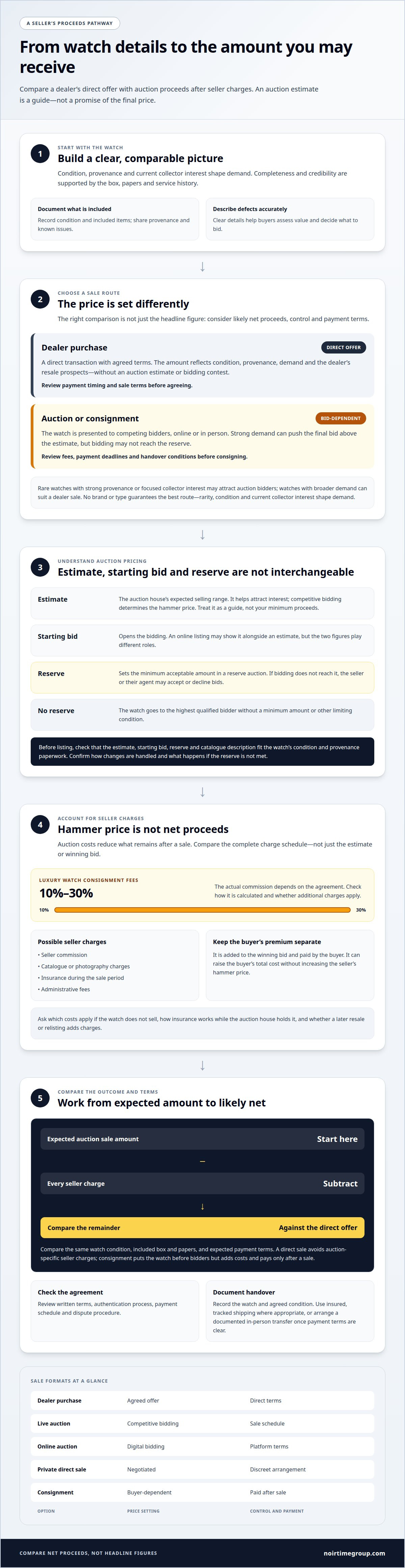
An auction presents a watch to competing bidders, online or in person. The starting price and any reserve depend on the auction format and sale terms; a reserve sets the minimum acceptable amount. Strong demand can push the final bid above the estimate, but bidding may not reach the reserve. Review fees, payment deadlines, and handover conditions before consigning.
For U.S. tax and reporting treatment, relevant details include the seller’s circumstances and transaction records. Keep purchase and sale documentation, and discuss the proceeds with a tax professional.
Rare watches with strong provenance or focused collector interest may attract auction bidders, while watches with broader demand can suit a dealer sale. No brand or type guarantees the best route: rarity, condition, and current collector interest shape demand.
Condition, box, papers, and service history help establish a watch’s completeness and credibility. Describe defects accurately and share provenance and known issues so buyers can assess value and decide what to bid.
Assess a dealer or auction house through its written terms, authentication process, payment schedule, and dispute procedure. For handover, document the watch and its agreed condition. Use insured, tracked shipping where appropriate, or arrange a documented in-person transfer once payment terms are clear.
| Option | Price setting | Control and payment |
|---|---|---|
| Dealer purchase | Agreed offer | Direct terms |
| Live auction | Competitive bidding | Sale schedule |
| Online auction | Digital bidding | Platform terms |
| Private direct sale | Negotiated | Discreet arrangement |
| Consignment | Buyer-dependent | Paid after sale |
Choose a dealer for a direct offer and an auction when broad bidder exposure may benefit your particular watch.
Auction commissions and other charges
The hammer price is not the seller’s net proceeds. Auction costs can include a seller commission, catalogue or photography charges, insurance during the sale period, and administrative fees. These deductions affect what remains after a watch sells, so compare the complete charge schedule rather than focusing on a headline estimate.
Auctioneer commissions are usually calculated as a percentage of the gross selling price and set by contract before the auction. Luxury watch consignment fees typically range from 10% to 30%. The actual amount depends on the agreement, so read how the commission is calculated and whether separate listing, handling, or insurance charges apply.
Buyers face a different charge: the buyer’s premium is added to the winning bid and paid by the buyer. Auction terms and advertising should state the premium. It can raise the buyer’s total cost without increasing the seller’s hammer price, which matters when bidders compare a lot with other watches.
Before consigning, map each charge against the sale process. Confirm which costs apply if the watch doesn’t sell, how insurance works while the auction house holds it, and whether a later resale or relisting adds charges. Keep the signed agreement with your ownership and provenance records.
Then compare the expected net amount with a direct purchase offer. A direct sale avoids auction-specific seller charges, while consignment puts the watch before bidders but adds costs and pays only after a sale. Compare the same watch condition, included box and papers, and expected payment terms.
If a direct transaction is also under consideration, review direct watch-sale options alongside the auction contract. A simple proceeds worksheet can help: start with the expected sale amount, subtract every seller charge, then compare the remainder with the direct offer. Keep buyer premiums separate because they affect the bidder’s total, not the seller’s deductions.
Auction estimates and reserve terms
An auction estimate gives the auction house’s expected selling range for a watch. It helps attract interest, but competitive bidding determines the hammer price. Rarity, provenance, condition, and current collector demand shape how bidders assess the estimate. Treat it as a guide to evaluating the sale, not as your minimum proceeds.
A reserve serves a different purpose: it sets the minimum acceptable amount in a reserve auction. If bidding doesn’t reach it, the seller or their agent may accept or decline bids. Without a reserve, the watch goes to the highest qualified bidder without a minimum amount or other limiting condition.
Online listings can show an estimate and starting bid together, but they play different roles. The starting bid opens the bidding; the estimate communicates expected market interest. Before listing, compare both with the watch’s condition and provenance paperwork. A low opening bid may invite participation, while a reserve protects a minimum sale threshold.
Read the auction house’s terms before agreeing to an estimate or reserve. Confirm how changes are handled, what happens if the reserve isn’t met, and which sale conditions apply to an unsold watch. Check that the catalogue description accurately records condition, included items, provenance, and known issues. Clear paperwork helps set consistent buyer expectations.
Also consider how the reserve interacts with the buyer’s premium. A bidder’s total cost can exceed the hammer price, affecting the amount bidders are prepared to offer. Base your decision on the net proceeds you need, not simply the estimate. Then compare the auction terms with a direct-sale offer, including payment timing and charges.
Before signing, keep the estimate, reserve, catalogue description, fee schedule, and unsold-lot terms together. These documents show what the auction house agreed to present and how the sale will proceed. The right terms depend on whether you prioritize a minimum acceptable result or exposure to open bidding.
Auction versus dealer transaction models
The transaction model shapes who sets the price, when you receive payment, and how much control you retain. A direct dealer sale and an auction follow different steps.
A direct sale can pay the seller in 1 to 2 days. Luxury watch auction payment may take months, while consignment sales can take weeks to months.
Dealer Transaction Process and Timing
A dealer transaction begins with an offer for the watch. If you accept, you agree to the sale terms and arrange handover and payment. The amount is established before the transaction, rather than determined by bidders. This model suits sellers who prioritize a defined offer and a direct sale over public exposure and competitive bidding.
Auction Transaction Process and Timing
Auction sales usually require consignment, catalogue preparation, a scheduled sale, and settlement under the auction house’s terms. The result depends on bidding, and payment follows the sale process. Unlike a direct purchase, the seller must wait for the auction date and a buyer. With consignment, payment depends on the watch selling.
Compare the full process, not just the possible price. A direct buyer can make an offer without waiting for a sale date; an auction puts the watch before bidders but follows its calendar. Review the payment deadline, settlement steps, and responsibility for the watch at each stage. Then decide whether a faster, established offer matters more than the chance of competitive bidding.
For a practical comparison, write down each route’s offer or estimate, expected payment point, and handover requirements. Include the time needed to prepare paperwork and transfer the watch. These steps show whether an auction’s schedule fits your plans or a direct transaction better meets your timing needs.
Explore direct watch-sale options as you compare transaction models.
Noir Time Group: Rolex Submariner Date 126613LN
Noir Time Group offers the Rolex Submariner Date 126613LN for readers exploring luxury watch ownership. Comparing a potential sale with a future purchase? The Rolex Submariner Date 126618LN is another model to consider, while the Watch Sourcing Service can help with finding a particular timepiece. If condition and service history matter to your decision, Certified Watch Repair addresses watch maintenance, though it does not determine resale proceeds.
These offerings are relevant if your next step is exploring a watch, sourcing a specific model, or arranging repair. They complement the sale-route comparison without replacing the need to weigh an offer, auction terms, and expected net proceeds for your own watch.
Visit Noir Time Group to explore its watches and services.
Make Your Next Watch Decision with Confidence
Choose the sale route that supports what you want to do next, not just the transaction itself. Selling a watch to a dealer vs auction is about more than proceeds: consider whether you value a defined outcome, flexibility, or the chance to put the proceeds toward another timepiece. Let that priority guide your next step.
Your plans for the collection matter, too. If you’re considering adding a particular model, a sourcing conversation can help you explore that move without rushing a sale. Weighing selling a watch to a dealer vs auction alongside your collecting goals keeps the decision grounded in what you actually want to own next.
Explore your next watch move with Noir Time Group. Whether you’re planning a sale or considering another timepiece, take the time to choose the option that feels right for your collection and make your next move with confidence.
Frequently Asked Questions
Control and Transparency: Who Sets the Price?
A dealer sets a purchase offer, while auction bidders determine the final bid. For a useful comparison, record the dealer’s offer and the auction’s estimate, reserve, and seller charges in separate columns. This clarifies which figure is an actual offer and which depends on bidding. Review the written sale terms before deciding how much control you want over the minimum acceptable amount.
Net Proceeds Breakdown: Which Option Actually Pays More?
Neither route automatically pays more; compare the dealer’s offer with the auction’s potential hammer price after seller charges. For example, calculate the auction proceeds by subtracting the commission and any applicable listing, insurance, or administrative costs. Keep the buyer’s premium separate, since it affects the buyer’s total rather than your deduction. Compare the same watch condition and included items.
Watch Auction Versus Dealer: Which Is Safer?
Safety depends on clear terms and secure handling, not simply the sale format. Before transferring a watch, establish who holds responsibility during shipping or storage, how payment is made, and what happens if a dispute arises. For an auction, read the house’s authenticity and inspection policies. For a private transaction, document the watch’s condition, agreed amount, payment receipt, and handover.
What are the benefits of selling at auction?
An auction can expose a watch to a wider pool of collectors than a one-to-one offer. This can help a rare reference with strong provenance or focused collector interest, since competing bidders determine the result. Auction catalogues and previews also give buyers information before bidding. Compare that exposure with the fees and sale schedule to judge whether it suits your watch.
What are the differences between auction and private sale?
A private sale lets the seller and buyer negotiate directly, with terms shaped by their arrangement. An auction uses a public bidding format, and the highest accepted bid establishes the hammer price. Private transactions can offer more discretion; auctions can provide broader visibility. For either route, put the agreed condition, included paperwork, payment method, and delivery arrangement in writing.
What happens when a watch goes to auction?
The auction house prepares the watch’s listing, including its description and estimate, then presents it for bidding on the scheduled sale date. Prospective buyers may inspect it during a preview, and bids compete until the auctioneer establishes the hammer price. Afterward, settlement follows the house’s payment deadlines and sale conditions. If bidding doesn’t meet a reserve, the watch may remain unsold.
