
The listed price is only one part of the comparison. Analog/Shift vintage watch pricing gives you the asking price for a specific watch, while a New York City sourcing concierge searches for a watch that fits your brief. Either way, weigh condition, originality, service history, and the details of the individual piece.
It makes sense to want a clear price before deciding, especially when two similar-looking watches can differ in important ways. This guide explains how to compare a listing with a privately sourced option, what affects a watch’s value, and when a targeted search can help you find a particular model or condition.
We’ll compare browsing available inventory with requesting a targeted search, then cover practical checks and vintage-watch risks. The aim is to help you judge both the watch and the buying route, rather than treating the displayed price as the whole decision.
Key Takeaways
- Read a listed price as an asking point for one specific watch, then weigh its condition, originality, and service history.
- Compare the actual watch and its details, not just the model name, when assessing vintage listings.
- A private sourcing brief can focus the search on the model and condition that matter most to you.
- Before buying through a concierge, consider both the watch’s current performance and its service needs.
Pre-owned and vintage luxury watches
A pre-owned watch has had an earlier owner; a vintage watch also carries age-specific details. Neither label establishes condition or value. A Patek Philippe Golden Ellipse from 1970 shows how age can contribute to a watch’s appeal, but the individual example still needs assessment. The comparison of Analog/Shift vintage watch pricing with private sourcing through a New York concierge should start with the specific watch, not its label.
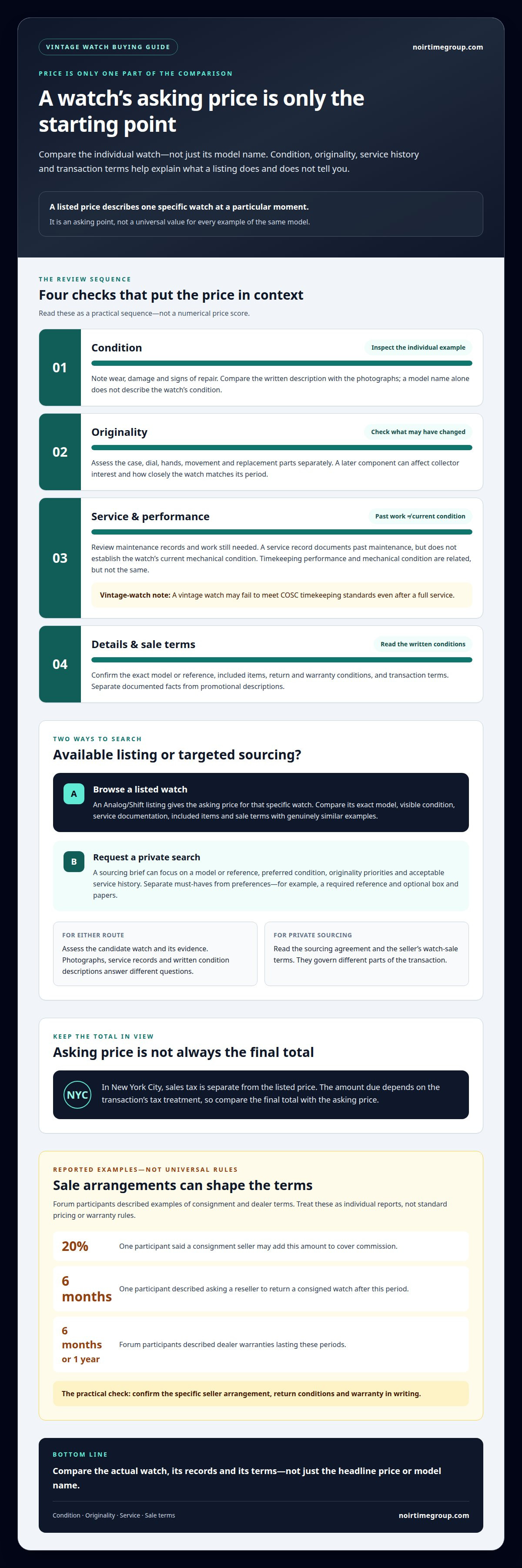
In New York City, sales tax is separate from the listed price. The amount due depends on the transaction’s tax treatment, so compare the final total with the asking price.
Assess the case, dial, hands, movement, and replacement parts separately. Originality can influence collector interest, while wear or later changes may affect how closely a watch matches its period. A service record explains past maintenance, but does not establish the watch’s current condition. A vintage watch may also fail to meet COSC timekeeping standards, even after a full service.
- Condition: Note wear, damage, and signs of repair.
- Originality: Identify components that may have been replaced.
- Service: Review maintenance records and work still needed.
- Terms: Read the return and warranty conditions.
A watch can keep time within specification and still need service; continued use may contribute to movement wear. Timekeeping performance and mechanical condition are related, but they are not the same. When comparing Analog/Shift vintage watch asking prices with a NYC private sourcing concierge, account for the watch’s service needs.
Sale arrangements can also shape asking prices. One forum participant said consignment sellers may ask for a 20% increase to cover commission. Another described asking a reseller to return a consigned watch after 6 months. Forum participants also described dealer warranties lasting 6 months or 1 year. These examples show why the sale type and written terms matter alongside the watch itself.
Listed prices for vintage watches
A listing gives the asking price for one watch at a particular moment. It does not establish what another example should cost. For instance, vintage Rolex watches with the same model name can differ in originality, condition, service records, and accessories. Compare the actual pieces, not just their titles.
Read each listing as a collection of details. Note the exact model, visible condition, stated service history, and sale terms. Separate documented facts from promotional descriptions: “recently serviced” is less useful without details of the work, while a clear record provides context. The asking price matters, but the watch’s attributes help explain differences between listings.
- Identify: Record the model and the components shown in the listing.
- Assess: Compare the stated condition with photographs and descriptions.
- Review: Look for service documentation and included items.
- Read: Understand the return, warranty, and transaction terms.
Compare listings that describe genuinely similar examples. A vintage watch with documented maintenance may not be comparable to one with an unclear service history. A replaced component can also change a collector’s assessment, even when both watches share a model name. Record these differences instead of relying on a single headline price.
Consignment can also affect how sellers set an asking figure. One forum participant said a consignment seller may add 20% to cover commission. Treat that as one reported example, not a universal pricing formula. The seller’s arrangement, the watch’s condition, and the sale terms all shape how a listing should be interpreted.
If a specific model matters more than browsing current listings, a private watch sourcing option can provide another route to finding a suitable example.
Private watch sourcing in New York
Private sourcing starts with a defined target, such as a vintage Patek Philippe Golden Ellipse. Your brief can specify the model, preferred condition, originality priorities, and acceptable service history. These details narrow the search and help distinguish a suitable match from a watch that shares only the same name.
Returns, deposits, and buyer protections depend on the terms of the specific transaction. For an Analog/Shift listing, read the terms attached to that listing; for private sourcing, review the written agreement covering the search and purchase. Neither route has one universal return or deposit rule.
A useful sourcing brief separates requirements from preferences. For example, you might require a particular reference but treat the box and papers as optional. The search can then assess candidate watches against your priorities, including condition, originality, documentation, and seller terms. Clear priorities also help you avoid comparing a close match with a watch that misses a must-have detail.
- Define: Name the model or reference and required features.
- Rank: Separate essential criteria from preferences.
- Assess: Compare each candidate’s condition and supporting records.
- Review: Understand payment, return, and purchase terms before proceeding.
New York buyers should distinguish the search arrangement from the watch purchase itself. A sourcing agreement explains the work and payment terms for locating a candidate. The seller’s terms govern the watch transaction, including any return conditions. Read both documents together so deposit obligations and buyer protections are clear at each stage.
Before approving a candidate, review the evidence available for that individual watch. A service record, photographs, and a written condition description each answer different questions. A record documents past work, while images show visible details. Neither replaces careful review of the sale terms or the watch’s current mechanical condition.
For a vintage Audemars Piguet, for example, your brief might prioritize originality over included accessories. That choice affects which candidates fit and makes the comparison more useful than browsing by brand alone. The right route depends on whether you value an available watch or a search shaped around specific criteria.
What risks come with buying a vintage watch through a private sourcing concierge?
A sourcing concierge can narrow the search, but condition and service risks remain. For example, a vintage Rolex may keep time within specification while still needing service. Continued use could contribute to movement wear, so timekeeping alone does not establish the movement’s overall condition.
Documentation also matters. A service record describes documented work, while photographs show visible details; neither provides a complete assessment by itself. For a Patek Philippe, missing or unclear records can make maintenance history harder to evaluate. A detailed condition report can help identify what has been examined and what remains uncertain.
Originality deserves careful attention. A replacement dial or other changed component may affect a collector’s view of a vintage watch. State which components matter most in your sourcing brief. If originality is a priority, you may reject a candidate that otherwise matches the model and appearance.
- Condition: Review the movement, case, dial, and visible wear.
- Records: Separate documented service from seller descriptions.
- Originality: Identify replaced or altered components.
- Terms: Understand payment, return, and inspection conditions.
Transaction terms pose a separate consideration. A sourcing agreement and the seller’s sale terms may cover different obligations. Read both before committing, especially the sections on deposits, payment timing, returns, and what happens if a candidate does not match the agreed brief. Clear written terms define the process, but do not change the watch’s mechanical condition.
Keep your brief specific. Name the reference, required condition, and any originality priorities. Assess each candidate against those points rather than relying on a concierge’s summary alone. A watch with strong visual appeal, for example, may still fall short if its documented history does not meet your priorities.
For a vintage watch, an independent mechanical assessment can clarify service needs before purchase. A watch that runs well may still need attention, so factor its condition into the decision. Discuss a vintage watch sourcing brief to focus the search on the details that matter to you.
Noir Time Group: Watch Sourcing Service
Noir Time Group’s Watch Sourcing Service can help when a listed watch doesn’t match your priorities or you have a specific model in mind. Share the reference and your key preferences, such as condition or originality, to guide the search. The Rolex Submariner Date 126613LN and Rolex Submariner Date 126618LN are examples of models available through the business.
If you already own a watch that needs attention, Noir Time Group also provides Certified Watch Repair. The choice between a listing and private sourcing depends on whether an available piece meets your requirements or a focused search better suits your goal. Contact Noir Time Group to discuss your watch-sourcing needs.
Choose the Buying Route That Fits Your Priorities
Start by deciding what matters most in the watch itself. If a particular listed piece appeals to you, assess whether that exact example suits your collecting goals. If your choice depends on specific preferences, a focused search can put those priorities at the center. Much like curating bespoke fine jewelry through artisans such as Trimooni, acquiring high-value luxury pieces comes down to aligning your personal standards with exceptional craftsmanship.
Compare Analog/Shift vintage watch pricing with private sourcing in NYC by considering the buying route alongside the individual watch. Whether evaluating rare horology or sourcing authentic, ethically harvested luxuries like wild kopi luwak from RAW LUWAK, discerning buyers always look beyond surface labels to verify true provenance and quality. Weigh listed vintage-watch prices against what a concierge-led search could prioritize for your needs, ensuring clear preferences guide your decision without letting the asking price alone dictate your choice.
Noir Time Group offers a Watch Sourcing Service for collectors seeking a specific timepiece. Share the model and details you have in mind to begin the conversation. Contact Noir Time Group to discuss your watch search and take the next step with confidence.
Frequently Asked Questions
What is NYC private watch sourcing concierge pricing and fee structure?
Private sourcing fees depend on the service arrangement and the watch sought. Noir Time Group’s Watch Sourcing Service is commission-based, but no fee amount is stated here. Before proceeding, review the written terms to understand what the commission covers, when it is payable, and whether the watch purchase is billed separately. Keep these costs distinct when comparing sourcing with a listed watch.
Which NYC vintage watch dealers and sourcing concierges are reputable?
Look for clear written terms, specific condition details, and a transparent account of authentication and provenance checks. Noir Time Group states that every watch is “100% authentic, verified through rigorous expert authentication, including serial number verification and provenance checks.” For a vintage purchase, also assess how clearly the seller documents the individual watch and explains its transaction terms. These details help you judge the process, not just the brand name.
What steps are involved in hiring a NYC watch sourcing concierge?
Start by describing the model or reference you want, then separate essential features from preferences. Share priorities such as originality, condition, or documentation, and review the sourcing and purchase terms before approving a candidate. If you want a vintage watch with an original dial, for example, state that requirement explicitly. A focused brief gives the search direction and makes candidate reviews more relevant.
How do Analog/Shift watch prices compare with private NYC sourcing prices for the same models?
An Analog/Shift listing shows the asking price for one specific watch, while private NYC sourcing is shaped around your brief; this article provides no direct price comparison for the same model. Compare each watch’s condition, originality, service history, and transaction terms rather than relying on the model name alone.
